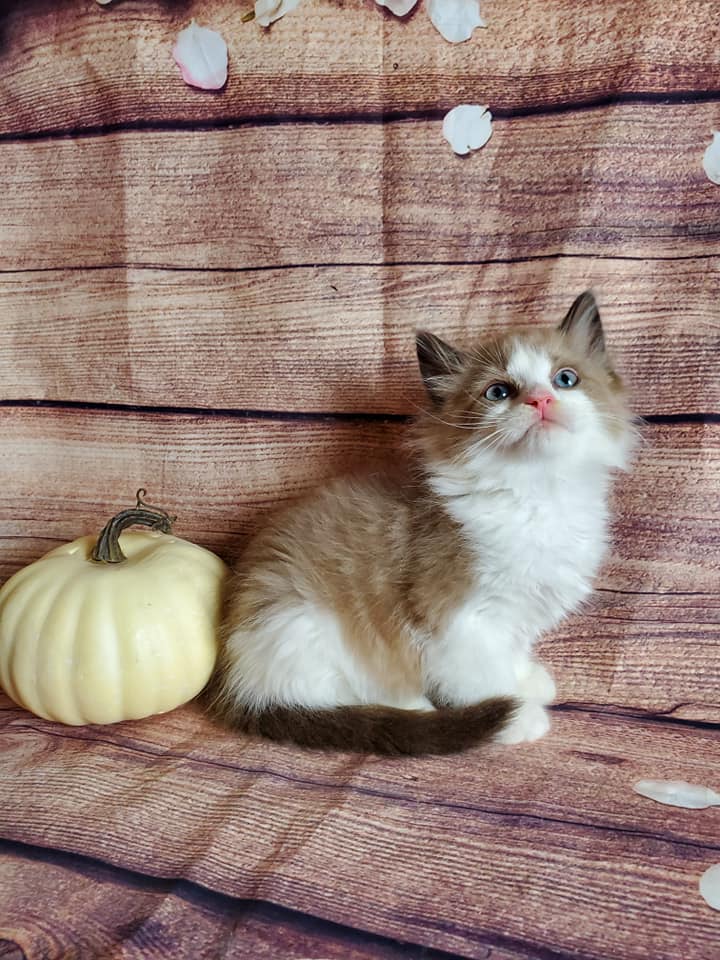
A Month-by-Month Guide to Your Ragdoll Kitten’s First Year
The first year with a Ragdoll kitten is a period of rapid physical growth, emotional development, and changing care needs. These gentle, people-oriented cats mature gradually, so a kitten may remain playful and youthful while developing the larger size and characteristic personality of an adult Ragdoll.
A predictable home routine helps your kitten feel secure. Daily handling, positive play, regular meals, veterinary care, and calm introductions to new experiences support confidence and good manners. Indoor, cage-free family care can give kittens a strong foundation before they join their new households.
This month-by-month guide outlines common milestones from the first weeks at home through the first birthday. Individual kittens mature at different rates, so use the schedule as a helpful framework and follow your veterinarian’s advice for vaccines, nutrition, parasite prevention, and sterilization.
The First Days And Month One
During the first days at home, give your Ragdoll kitten a quiet room with food, water, a litter box, scratching surfaces, and a comfortable bed. Let the kitten explore gradually rather than providing access to the entire home immediately. Gentle play and short periods of handling help build trust without causing overstimulation.
By the end of the first month, schedule a wellness examination if one has not already occurred. Your veterinarian can review vaccination records, examine the heart and lungs, check for parasites, and discuss a feeding plan. A high-quality kitten diet with appropriate protein and calories supports healthy growth, while fresh water should always be available.
Months Two And Three
At two months, a Ragdoll kitten is usually energetic, curious, and ready to practice important household habits. Offer interactive toys, climbing options, and scratching posts, while keeping small objects, toxic plants, electrical cords, and unsafe windows out of reach. Reward litter box use and calm handling with praise or a small treat.
The third month is a useful time to continue socialization. Brief exposure to household sounds, carriers, grooming tools, and different surfaces can make future travel and veterinary visits easier. Keep each experience positive and allow the kitten to retreat when tired. Core vaccinations commonly continue during this stage according to the schedule set by your veterinarian.
| Age | Common Development | Helpful Care Priorities |
|---|---|---|
| One month home | Settling in, learning routines | Safe room, wellness visit, kitten nutrition |
| Two months | Active play and exploration | Scratching training, litter habits, safe toys |
| Three months | Greater confidence and coordination | Continued socialization, vaccine visits, grooming practice |
| Four months | Rapid growth and stronger preferences | Measured meals, daily play, coat care |
| Five months | Increased independence and agility | Secure windows, dental care, behavior guidance |
| Six months | Adolescent energy and sexual maturity may begin | Veterinary discussion of spay or neuter, weight monitoring |
Months Four And Five
At four months, your kitten may appear taller and more coordinated, although Ragdolls continue growing for several years. Daily brushing helps prevent mats and teaches the kitten that coat care is a normal part of life. Pay particular attention to areas behind the ears, under the front legs, and around the hindquarters.
By five months, play may become more intense. Wand toys, puzzle feeders, and supervised climbing activities provide mental stimulation without encouraging rough biting or scratching. Redirect teeth and claws toward toys rather than punishing unwanted behavior. Consistent boundaries are especially valuable for a social breed that enjoys close interaction with people.
Months Six Through Eight
Around six months, discuss sterilization with your veterinary team if the kitten has not already been spayed or neutered. Your veterinarian can recommend appropriate timing based on health, development, and household circumstances. After the procedure, follow instructions for incision monitoring, activity limits, and pain management.
At seven and eight months, adolescent Ragdolls often have bursts of energy followed by long naps. Continue measuring meals and monitoring body condition, since overeating can place stress on developing joints. Keep vaccinations, parasite prevention, and health examinations current, including any screening recommended for your cat’s risk profile.
Months Nine Through Eleven
Between nine and eleven months, your Ragdoll may look nearly grown but still behave like a kitten. The breed’s substantial frame, soft coat, and color-point pattern continue developing over time. Regular brushing, nail trimming, dental care, and ear checks should now be familiar parts of the weekly routine.
This is also a good period to reinforce calm behavior during visitors, carrier trips, and grooming. Ragdolls are often affectionate and adaptable, but every cat has a distinct temperament. Respecting the kitten’s signals while providing steady companionship supports a secure bond and may be especially helpful if the cat is being raised as a therapy companion.
The Twelfth Month And Beyond
At one year, your Ragdoll has reached an important milestone but is not necessarily finished growing. Many Ragdolls continue maturing in size, muscle, coat, and social confidence into adulthood. Your veterinarian can assess weight, body condition, dental health, and the transition from kitten food to an adult maintenance diet.
Keep the home enriching with window perches, safe scratching areas, interactive play, and regular human contact. A predictable routine helps prevent boredom and supports the friendly, relaxed temperament for which Ragdolls are known. Continue monitoring changes in appetite, litter box habits, breathing, energy, and mobility, and arrange veterinary care when anything seems unusual.
A Healthy Routine For Every Month
Small daily habits are easier for a kitten to learn than occasional, lengthy care sessions. Pair grooming and handling with calm praise, and stop before the kitten becomes distressed. Never give human medication or make major dietary changes without veterinary guidance.
For a strong first year, prioritize these practices:
- Feed a complete kitten diet in portions suited to your cat’s age, size, and activity level.
- Schedule wellness examinations, vaccines, parasite prevention, and recommended health screening.
- Brush the coat regularly and introduce nail trimming and dental care gradually.
- Provide daily interactive play, safe climbing spaces, and appropriate scratching posts.
- Track weight, appetite, litter box habits, and behavior so changes are noticed early.
A Ragdoll kitten’s first year shapes lifelong habits, trust, and wellbeing. Families considering a purebred kitten can learn more about colors, markings, health testing, and adoption availability from Ragdoll Kittens Cattery, a small TICA-registered hobby cattery in Helena, Montana. Contact the cattery to discuss available kittens raised indoors in a family environment and find a well-matched companion for your home.