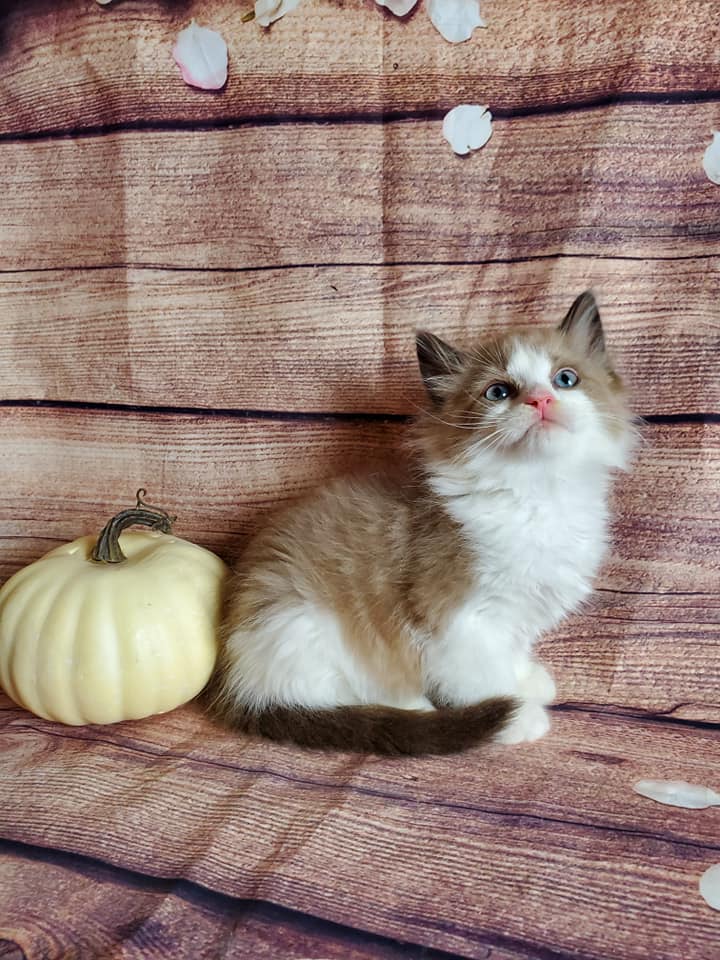
A Gentle Start for Confident Ragdoll Kittens
How our Ragdoll kittens are handled and socialized daily helps shape their comfort with people, household sounds, and new experiences. At Ragdoll Kittens Cattery in Helena, Montana, kittens grow indoors in a cage-free family environment where human contact is part of their ordinary routine.
Our small, TICA-registered hobby cattery raises purebred Ragdolls with attention to both health and temperament. Daily interaction is calm, consistent, and age-appropriate rather than rushed. Each kitten has opportunities to rest, play, explore, and receive gentle attention from familiar caregivers.
This early foundation supports kittens as loving companions and, when appropriate, therapy cats. Socialization cannot remove every uncertainty from a kitten’s future, but it can help build trust, flexibility, and a positive association with people.
Growing Up In A Family Environment
Ragdoll kittens are raised inside the home rather than separated from everyday family life. They become familiar with ordinary sights, movements, and sounds while still having safe spaces where they can retreat for sleep and quiet time.
A cage-free setting allows kittens to move naturally between play, rest, and social contact. This freedom encourages curiosity and gives each kitten room to develop at an individual pace. Caregivers observe body language closely so interaction remains pleasant and never overwhelming.
The goal is a balanced experience. Kittens receive attention throughout the day, but they are also allowed uninterrupted naps and time with their littermates. Healthy social development includes both connection and the ability to settle calmly.
Gentle Handling From The Early Weeks
Handling begins with simple, reassuring contact. Caregivers may softly stroke a kitten, lift it with full support, touch its paws, and briefly examine its ears, coat, and face. These experiences are kept gentle and positive, helping kittens become comfortable with routine care.
As kittens mature, their interactions can include being held in different positions, cuddling beside a person, and being transferred carefully from one caregiver to another. The purpose is familiarity, not restraint. A relaxed kitten is allowed to end an interaction and return to play or rest.
Short sessions are especially useful for young cats. Frequent, pleasant contact can be more effective than long periods of handling. Treats, praise, play, and a calm voice help create positive associations with human touch.
Everyday Experiences That Build Confidence
Socialization includes more than cuddling. Kittens gradually encounter household activity such as quiet conversations, footsteps, doors opening, gentle cleaning sounds, and normal movement around their living area. Exposure is supervised and adjusted to each kitten’s comfort level.
Play also supports confidence. Interactive toys, soft objects, climbing opportunities, and littermate games allow kittens to practice coordination and communication. These activities encourage exploration while teaching them to pause, recover, and return to play.
Caregivers watch for signs of comfort, curiosity, or overstimulation. A kitten that approaches, plays, or settles near people is showing readiness for engagement. If a kitten turns away, hides, or becomes tense, the interaction is reduced and the kitten is given space.
| Daily experience | What it supports | How it is approached |
|---|---|---|
| Gentle holding and petting | Comfort with human touch | Brief, supported, and positive |
| Paw, ear, and coat contact | Easier grooming and routine care | Introduced gradually |
| Household sounds and movement | Familiarity with a home environment | Calm, supervised exposure |
| Interactive play | Confidence, coordination, and bonding | Matched to age and energy |
| Quiet rest periods | Self-settling and emotional balance | Protected from unnecessary interruption |
Supporting Health And Emotional Well-Being
A kitten’s behavior is closely connected to physical well-being. Regular observation helps caregivers notice changes in appetite, energy, litter box habits, or social behavior. Kittens receive appropriate veterinary attention, and the cattery emphasizes screening for HCM, FIV, FeLV, and feline heartworm disease.
Health-conscious care supports effective socialization because kittens learn best when they feel secure and comfortable. Clean surroundings, appropriate nutrition, rest, and careful monitoring all contribute to a stable start.
Each kitten is also an individual. Some Ragdolls may seek attention immediately, while others may prefer to watch before joining an activity. Respecting these differences helps social confidence develop without forcing a particular personality.
Preparing Kittens For Their New Homes
As adoption approaches, daily experiences can reflect the gentle routines families use at home. Kittens continue to receive affection, play opportunities, and handling that helps them become familiar with being picked up, groomed, and transported safely.
Families receive information about Ragdoll traits, colors, markings, care needs, and the adoption process. Understanding a kitten’s routine makes the transition easier and helps the new family continue building trust from the first day.
Ragdolls are known for their affectionate nature, but every kitten still needs patience during a change in environment. A quiet room, predictable meals, safe exploration, and respectful handling can help a newly adopted kitten settle in at its own pace.
Helpful Practices For New Ragdoll Families
The socialization work started at the cattery is most effective when it continues through gentle, consistent care. New families can reinforce confidence without turning every interaction into a training session.
Use these practices during the first weeks at home:
- Provide a calm starter room with food, water, litter, bedding, and safe toys.
- Let the kitten approach new people rather than passing it from person to person.
- Pair brushing, nail care, and brief handling with praise or a favorite reward.
- Introduce household sounds gradually and provide a quiet retreat.
- Keep play sessions short, supervised, and appropriate for the kitten’s age.
A predictable routine helps a kitten understand what to expect. Over time, families can expand access to the home while continuing to protect sleep, supervise play, and notice signals that the kitten needs a break.
When you are ready to welcome a well-cared-for Ragdoll kitten into your home, contact Ragdoll Kittens Cattery to learn about available litters, health practices, colors, markings, and the adoption process. Our limited placements are intended for families seeking loving pets or potential therapy companions.