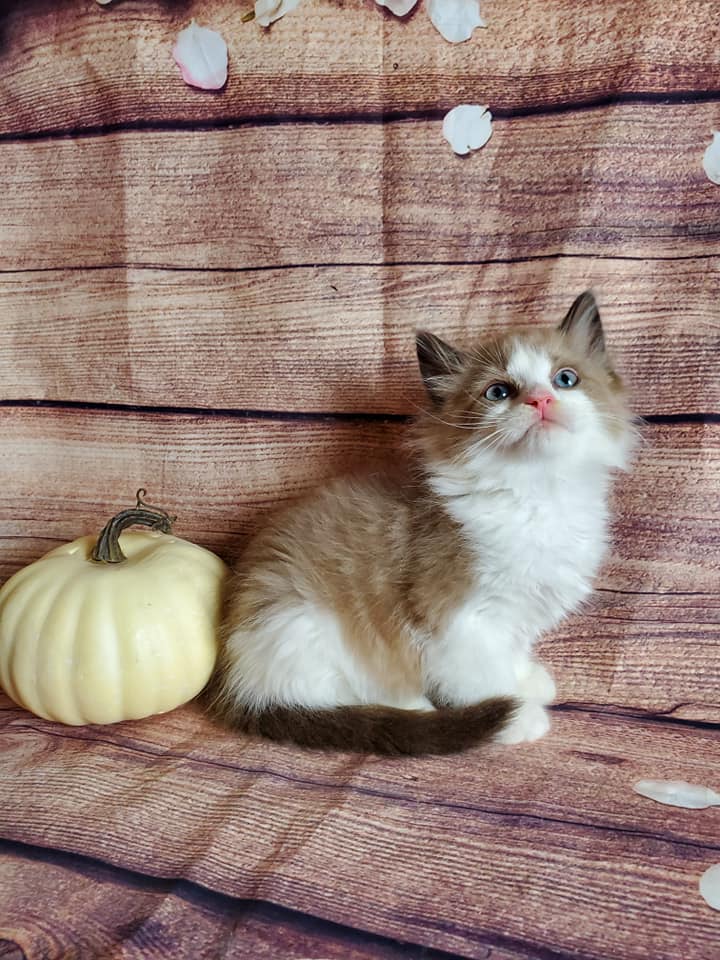
Choosing a Safe Collar and ID Tag for Your Ragdoll
A collar can help identify your Ragdoll if it slips through a door, wanders into the garden or becomes separated during travel. However, a poorly fitted collar can catch on furniture, scratch delicate skin or cause serious injury. The safest choice combines a quick-release fastening, light construction and a comfortable fit.
Ragdolls are large, gentle cats with soft, semi-long coats. Their thick ruff can hide a collar that is too tight, while a heavy tag may pull at the neck or become tangled in furnishings. Kittens also grow quickly, so the fit needs regular attention during the first year.
Australian homes bring practical considerations. A cat in Melbourne may spend time indoors during cold weather, while a Brisbane cat may encounter warm, humid conditions that encourage moisture under the collar. In Sydney, Perth or Adelaide, balconies, fences and busy streets make reliable identification especially valuable.
Whether your kitten comes from a registered breeder such as Ragdoll Kittens Cattery in Helena, Montana, or from an Australian cattery, ask about its socialisation and handling history. A kitten raised indoors and handled daily may adjust more easily to wearing a collar when the introduction is gradual and positive.
Start With A Breakaway Design
Choose a collar made specifically for cats with a safety-release, or breakaway, buckle. If the collar catches on a branch, flyscreen, crate or piece of furniture, the buckle should open when enough pressure is applied. This is especially important for cats allowed into enclosed gardens or supervised outdoor areas.
Avoid ordinary buckles, elastic-only collars and decorative bands designed for dogs. Elastic can stretch around a cat’s jaw or leg, while a fixed buckle may stay attached during an accident. Bells are optional; if used, they should be small, securely attached and not so heavy that they irritate your cat.
Test the release mechanism before fitting the collar and inspect it after washing or extended use. A safety buckle that opens too easily may be lost during normal play, while one that never releases defeats its purpose.
Select Soft, Light And Adjustable Materials
Nylon and soft woven fabric are common choices because they are lightweight, washable and available through Australian pet shops and online retailers. Look for smooth edges, strong stitching and a buckle that does not press into the throat. Avoid rough leather, rigid plastic and collars with sharp studs.
A suitable collar should allow two flat fingers to slide between the collar and your cat’s neck. This leaves breathing and swallowing room without allowing the collar to slip over the head. Check the fit while your Ragdoll is relaxed, then repeat the check after grooming because a fluffy ruff can disguise a problem.
Kittens require frequent adjustments. Check the collar every few days at first and at least weekly as your cat grows. Remove it immediately if you notice redness, hair loss, damp fur, scratching or a change in behaviour.
Match The Tag To Everyday Safety
An ID tag should be small enough to stay comfortable but large enough to hold essential information. A cat’s name, your mobile number and a short phrase such as “Please call” are usually more useful than a long address. Include an Australian mobile number if your cat lives in Australia, and add a second contact for holidays or emergencies.
Microchipping remains the most dependable permanent identification method. In Australia, cats are commonly required to be microchipped under state or territory rules, with exact requirements varying between councils. A tag helps someone contact you immediately, while a shelter or veterinary clinic can scan the microchip if the collar has come off.
| Feature | Safer Choice | Avoid |
|---|---|---|
| Fastening | Cat-specific breakaway buckle | Fixed dog buckle |
| Fit | Two-finger space under the collar | Tight or loose fitting |
| Material | Soft, smooth, lightweight nylon | Rough edges or heavy leather |
| Tag | Small, rounded, readable tag | Large, swinging or sharp tag |
| Identification | Current mobile number and microchip | Outdated details only |
| Visibility | Reflective or high-contrast finish | Hard-to-read dark engraving |
Keep Identification Comfortable
A rounded, engraved tag is less likely to catch in a Ragdoll’s coat than a large, dangling charm. Silencers can reduce noise, but they may make the engraving harder to read and add bulk. Check that the tag attachment ring is closed securely and cannot slide over the buckle.
Reflective stitching or a reflective tag can improve visibility near driveways and streets after sunset. This is useful in urban areas such as Canberra or the outer suburbs of Brisbane, where a cat may be difficult to spot in low light. It does not replace supervision, secure fencing or indoor living.
Some owners use a GPS tracker, but many units are too heavy for kittens or require frequent charging. If you choose one, check its weight, attachment method, mobile-network coverage and water resistance before relying on it.
Account For Australian Conditions
Heat and humidity can make a collar uncomfortable. During a hot Queensland summer, inspect the neck for trapped moisture and allow the coat to dry fully after outdoor activity. In dusty regions around Perth or inland New South Wales, fine particles can collect under the band and irritate the skin.
Snakes, ticks, cars and unfamiliar dogs are further reasons to treat outdoor access cautiously. A collar is an identification aid, not protection from wildlife or traffic. Many Australian Ragdoll owners choose secure cat enclosures, screened verandas or supervised harness time instead of unrestricted roaming.
A harness should never be used as a substitute for a collar or attached to the collar itself. If your cat travels to a veterinary clinic, boarding facility or holiday house along the Great Ocean Road, use a properly fitted cat harness and carrier, while keeping permanent identification current.
Introduce The Collar Gradually
Place the collar beside food, bedding or a favourite toy for a day so your kitten can investigate its smell. Next, fit it for a few minutes indoors while offering treats or gentle play. Remove it if your cat becomes distressed, then try again later for a shorter period.
Increase wearing time gradually and supervise the first sessions. Watch for repeated pawing, freezing, rolling, excessive grooming or attempts to chew the buckle. These signs may indicate that the collar is too tight, too heavy or simply being introduced too quickly.
Practical details deserve a regular routine:
- Confirm that two fingers fit comfortably beneath the collar.
- Read the ID tag and test the breakaway buckle each week.
- Update your microchip registration after moving house or changing phone numbers.
- Inspect the neck for redness, matting, dampness or missing fur.
- Replace the collar when the fabric frays, the tag becomes unreadable or the release weakens.
A well-chosen collar should become an unobtrusive part of your Ragdoll’s routine. Keep the tag light, the fit loose enough for comfort, the buckle safety-rated and the microchip record current. The practical takeaway is simple: check the collar and identification details as regularly as you check your cat’s coat.