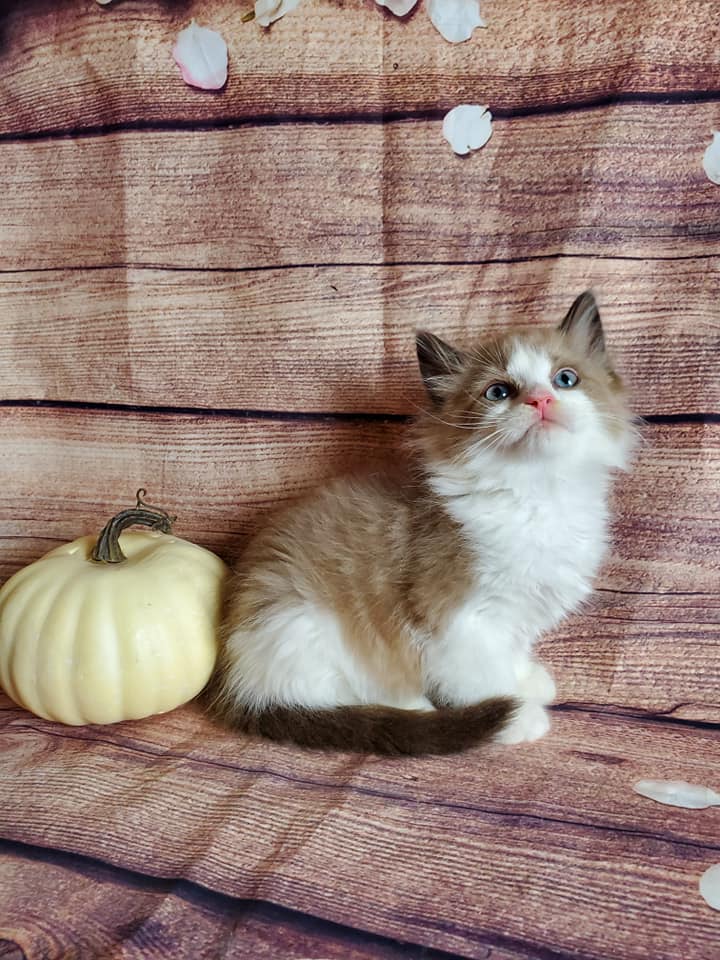
How to Start Clicker Training with Your Ragdoll Kitten
Clicker training gives a Ragdoll kitten a clear, gentle way to understand which behaviors earn rewards. The sound of the click marks the exact moment your kitten does something desirable, while a small treat or another valued reward reinforces the lesson.
Ragdolls are often affectionate, observant, and people-oriented, which can make them receptive to positive reinforcement. Still, each kitten has an individual temperament. Training should feel like a short game rather than a test of obedience, especially while your kitten is adjusting to a new home.
At Ragdoll Kittens Cattery in Helena, Montana, kittens are raised indoors in a cage-free family environment and handled daily. That early interaction can provide a useful foundation for learning, trust, and calm communication after adoption.
Why Clicker Training Suits Ragdoll Kittens
A clicker creates a consistent signal that bridges the gap between a behavior and its reward. For example, if your kitten sits briefly and receives a treat several seconds later, the click can identify the precise action that earned it. This clarity helps prevent confusion.
The method is based on rewards rather than punishment. Ragdoll kittens may become hesitant if they are scolded, physically positioned, or pressured to perform. A calm voice, patient timing, and freedom to pause help preserve confidence and strengthen the bond between kitten and owner.
Clicker work can also provide mental stimulation for an indoor cat. Short training games encourage your kitten to watch, think, move, and interact with you in a structured way.
Gather Simple Training Supplies
Choose a quiet room with limited distractions and use a clicker that produces a distinct but comfortable sound. If your kitten is sensitive to noise, keep the clicker behind your back or use a soft verbal marker such as “yes.” The marker must remain consistent.
Select tiny, soft rewards that your kitten can eat quickly. Some kittens prefer a portion of their regular food, while others respond to freeze-dried meat or specially formulated treats. Keep the pieces very small so several repetitions do not replace a balanced diet.
A target stick is optional. You can begin with your finger or a capped pen, but never allow your kitten to chew small objects. A mat or washable blanket can later become a familiar station for teaching calm behaviors.
Teach the Meaning of the Click
Before asking for a specific behavior, pair the click with a reward. Click once, immediately offer a treat, and wait a few seconds. Repeat this sequence several times during a session, then stop while your kitten is still interested.
The goal is for your kitten to recognize that the click predicts something pleasant. Do not click repeatedly to get attention, and do not use the sound to correct unwanted behavior. Once the association is established, click only when your kitten performs or begins the behavior you want.
Watch body language carefully. Relaxed ears, a soft posture, and willingness to approach suggest that the session is comfortable. Flattened ears, tail lashing, hiding, or walking away indicate that it is time for a break.
Begin With Easy, Natural Behaviors
Start by capturing behaviors your kitten already offers. When your kitten looks toward you, click and reward. When all four paws touch the floor, mark that moment. These simple successes teach your pet how the game works without requiring physical guidance.
Teaching a name is a practical first exercise. Say the name once in a cheerful tone. When your kitten turns toward you, click and reward. Practice from a short distance and gradually add mild distractions as your kitten becomes reliable.
| Training Goal | What to Mark | Suitable Reward |
|---|---|---|
| Responding to a name | Turning toward you | Tiny food treat or praise |
| Target touching | Nose touches a safe target | High-value treat |
| Sitting | Hips lower naturally | Small treat |
| Carrier comfort | Entering or staying near the carrier | Food, play, or affection |
| Handling tolerance | Calm acceptance of brief touch | Treat and a pause |
Shape Useful Everyday Skills
Once your kitten understands the marker, teach a nose touch. Present your finger a few inches away. When your kitten investigates and touches it, click and reward. This behavior can later guide your kitten onto a mat, toward a scale, or into a carrier.
For a sit, hold a treat just above your kitten’s nose and slowly move it back. As the head follows the treat, the hips may lower naturally. Click as the bottom touches the floor, then reward. Avoid pushing your kitten into position because the aim is voluntary participation.
Carrier training can begin with the door secured open and treats placed near the entrance. Click for looking at the carrier, approaching it, placing one paw inside, and eventually entering. Progress gradually, using the carrier as a familiar resting place rather than bringing it out only for veterinary visits.
Keep Lessons Short And Positive
A young kitten may learn effectively in sessions lasting one to three minutes. End after a successful repetition, offer a calm reward, and allow plenty of rest. Several brief sessions spread across the day are usually more productive than one long lesson.
Train before a regular meal when your kitten is mildly interested in food, but avoid making the kitten overly hungry. Play, praise, gentle petting, or access to a favorite toy can serve as rewards when food is not the best option.
If progress stops, simplify the behavior. Reward an earlier step, reduce distractions, or take a break. Learning speed can vary with age, energy level, health, and surroundings. A healthy kitten from a responsible cattery still needs time to settle into a new household.
Practical Habits For Successful Training
Positive reinforcement works best when everyone in the home uses the same cues and expectations. Keep the clicker and treats accessible, but store rewards securely so your kitten does not become frustrated or consume too much.
Use these habits to build steady progress:
- Click at the exact moment the desired behavior occurs.
- Give the reward immediately after each correct response.
- Practice one new behavior at a time.
- Keep hands gentle and avoid forced positioning.
- Record brief notes about what your kitten enjoys and learns.
Health and comfort should remain part of every training plan. Regular veterinary care, appropriate nutrition, and attention to inherited conditions support a kitten’s ability to engage and learn. Ragdoll Kittens Cattery emphasizes screening related to HCM, FIV, FeLV, and feline heartworm disease as part of responsible kitten care.
Clicker training can become a rewarding part of life with a Ragdoll, from teaching a name to creating a calmer carrier routine. Families considering a well-socialized companion or therapy prospect can explore the available Ragdoll kittens and adoption information from Ragdoll Kittens Cattery in Helena, Montana.