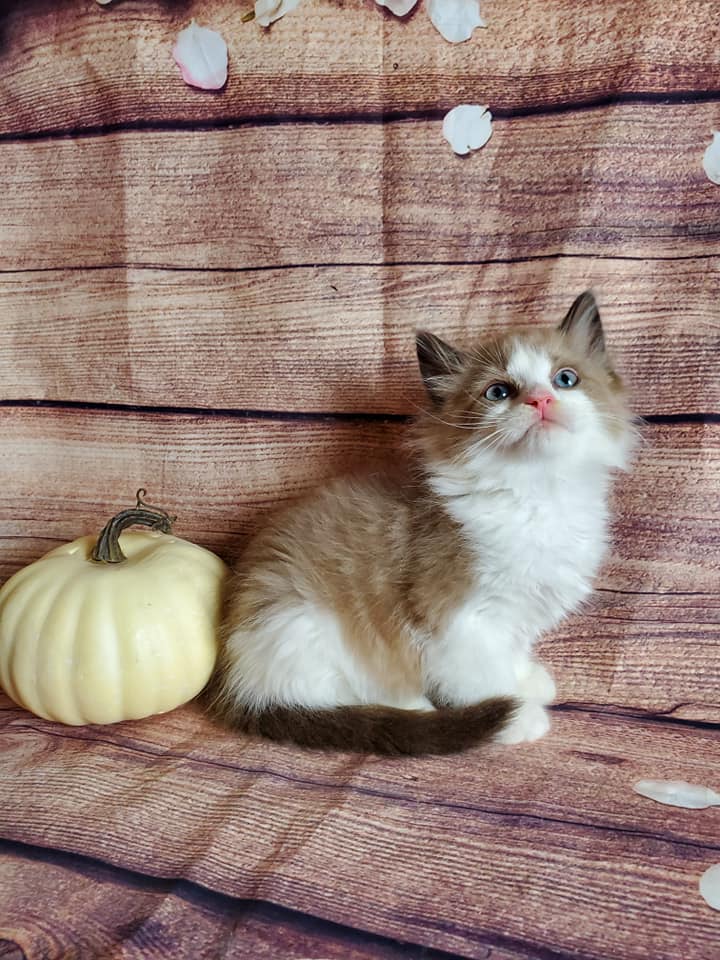
How to Teach Your Ragdoll Kitten Its Name and Recall
Teaching a Ragdoll kitten its name and recall gives you a practical way to communicate during everyday life. A reliable response can help you call your kitten away from unsafe areas, prepare for veterinary visits, or bring it inside after supervised outdoor time.
Ragdolls are often gentle, people-oriented cats, and many enjoy following their families from room to room. Still, every kitten learns at its own pace. Short, positive training sessions work better than repeated calling, chasing, or raising your voice.
At Ragdoll Kittens Cattery in Helena, Montana, kittens are raised indoors in a cage-free family environment and handled daily for socialization. These early experiences can help kittens become comfortable with human voices, touch, and routine, giving new owners a useful foundation for name training.
Choose A Clear, Consistent Name
Select a name that is easy to say and sounds different from common household commands. Names with one or two syllables are often simple for families to repeat, although a longer name can work when everyone uses the same pronunciation and nickname.
Say the kitten’s name in a pleasant, bright tone. Avoid pairing it with scolding, nail trimming, or other unpleasant events during the early stages. Your goal is for the sound of its name to predict attention, play, affection, or a small food reward.
Every family member should use the same name. If one person says “Milo,” another says “Mimi,” and a third uses several unrelated nicknames, the kitten may learn that each sound has a different meaning.
Create A Positive Name Association
Begin in a quiet room when your kitten is relaxed and awake. Say its name once, then wait briefly. The moment it looks toward you, turns an ear, or moves in your direction, mark the response with praise and offer a tiny treat or favorite toy.
At first, do not expect the kitten to walk across the room. Looking at you is a successful first step. Repeat the exercise several times, then stop while the kitten remains interested. Two or three short sessions each day are usually more effective than one long lesson.
Keep rewards small so training does not replace balanced meals. You can also use gentle petting, a soft “good kitten,” or a brief play session if those rewards matter more to your Ragdoll than food.
Add Distance And Movement
Once your kitten consistently looks at you when you say its name, take one or two steps away before calling. Reward any movement toward you. Gradually increase the distance, changing rooms only after the kitten responds reliably in the current space.
Use a happy voice and crouch down if your kitten seems uncertain. Avoid standing over it or reaching quickly, as sudden movements can make a young cat hesitate. Ragdolls may be calm and trusting, but confidence still develops through predictable interactions.
Practice when the kitten is mildly interested in you, rather than deeply asleep or intensely focused on a toy. You can call from behind a doorway, beside a scratching post, or from another part of the room. Always make coming to you worthwhile.
| Training stage | What to do | Successful response |
|---|---|---|
| Name recognition | Say the name once in a quiet room | The kitten looks, turns an ear, or pauses |
| Short-distance recall | Take a step away and call | The kitten moves toward you |
| Room-to-room recall | Call from a nearby space | The kitten follows or reaches you |
| Mild distraction | Call during gentle play or exploration | The kitten disengages and approaches |
| Everyday reliability | Reward occasional spontaneous responses | The kitten regularly checks in when called |
Teach A Separate Recall Cue
A name usually means “pay attention,” while a recall cue means “come to me.” You may use a cheerful phrase, a kiss sound, or a soft whistle. Choose one signal and keep it reserved for situations when you can provide a reward.
Start by making the sound when your kitten is already close, then immediately offer something valuable. After several repetitions, add a small amount of distance. This helps the kitten connect the cue with reaching you rather than hearing an unfamiliar noise across the house.
Never use the recall cue to deliver punishment. If you need to end play, administer medicine, or place the kitten in a carrier, follow the recall with praise and a reward before calmly completing the necessary task. This protects the meaning of the cue.
Strengthen Skills With Everyday Practice
Use natural moments for recall training. Call your kitten before meals, when opening a favorite toy, or when settling down for evening cuddles. Rewarding occasional check-ins teaches the kitten that responding remains valuable beyond formal sessions.
When several people live in the home, each person should practice in turn. Children can participate under supervision by sitting on the floor, using a gentle voice, and offering a reward only after the kitten approaches.
Keep sessions calm and brief. Stop if your kitten becomes tired, distracted, or frustrated. A successful response followed by a break helps preserve enthusiasm for the next lesson.
Avoid Common Recall Mistakes
Calling a kitten repeatedly can weaken the meaning of its name. If there is no response, pause and make the situation easier by moving closer, reducing distractions, or using a toy to regain attention. Say the name once again when you can reward a likely response.
Avoid chasing your kitten when it runs away after being called. Chasing may turn recall into a game of evasion. Instead, lower your body, use an inviting voice, move away from the kitten, or gently shake a familiar treat container.
Useful habits for steady progress include:
- Reward attention quickly, even when the response is only a head turn.
- Practice in several safe areas of the home.
- Use high-value treats sparingly for difficult recalls.
- Keep the name and recall cue separate and consistent.
- Refresh the skill throughout your cat’s life.
Support A Confident, Healthy Start
A kitten’s ability to learn is influenced by comfort, sleep, nutrition, and the quality of its early handling. Health-conscious breeders screen for conditions such as HCM, FIV, FeLV, and feline heartworm disease, while responsible socialization helps kittens adjust to household sounds and human contact.
Ragdoll Kittens Cattery offers limited purebred Ragdoll kittens for loving homes and therapy-cat prospects. Learning about color, markings, temperament, health testing, and the adoption process can help families prepare for a positive transition.
Begin name practice as soon as your new kitten feels secure, then build recall through patience and rewards. Contact Ragdoll Kittens Cattery to learn about available Ragdoll kittens and prepare for a well-socialized companion who can become a confident part of your family.