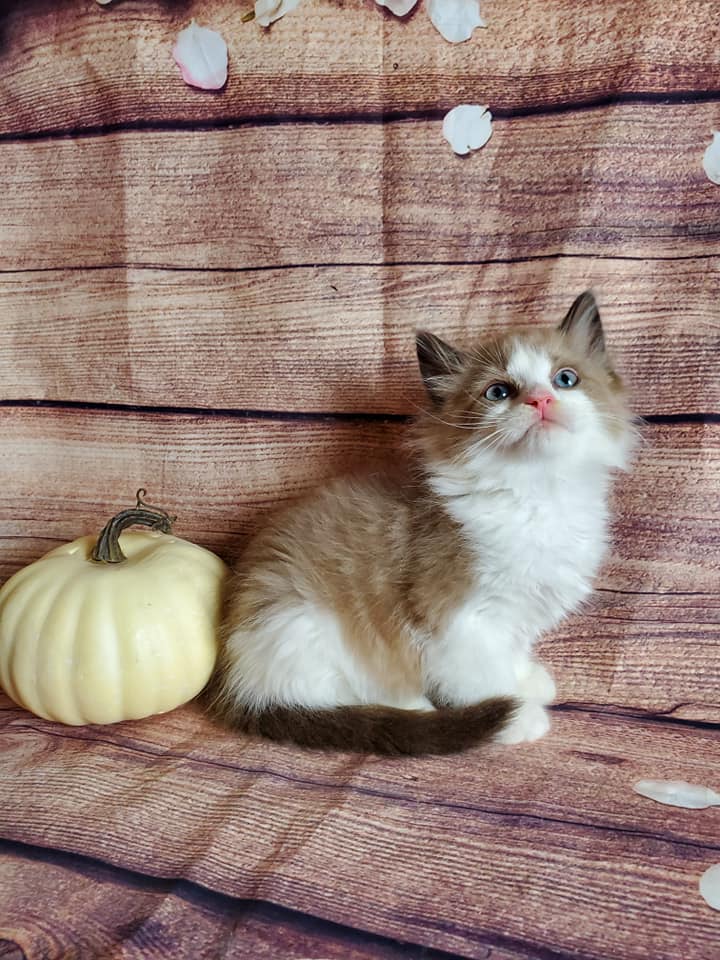
How to Recognize a Genuine Purebred Ragdoll
A Ragdoll’s striking blue eyes, colorpoint coat, and calm personality make the breed easy to recognize. However, appearance alone cannot prove that a cat is purebred. Several unrelated cats can resemble a Ragdoll, especially when they have long hair, pointed markings, or a relaxed temperament.
Reliable identification comes from combining documented ancestry, registration records, breed characteristics, and responsible health information. A kitten may look remarkably similar to a Ragdoll while having no verifiable pedigree.
For families seeking a loving companion or therapy cat, choosing a transparent breeder is especially important. A small, home-based cattery should be willing to explain its breeding program, provide records, and discuss how each kitten is raised and socialized.
Start with a documented pedigree
The strongest evidence of purebred status is a pedigree that traces the kitten’s parents, grandparents, and earlier ancestors through a recognized cat registry. Organizations such as TICA maintain registration systems for pedigreed cats and can help establish that a kitten comes from documented Ragdoll lines.
A pedigree should match the kitten’s registered name, birth date, color or pattern, and parent information. The breeder should also provide a registration application or certificate when the kitten is eligible for registration. A verbal claim that the parents are “full Ragdoll” is not the same as documented lineage.
Registration papers do not automatically guarantee excellent breeding practices, but they provide a verifiable foundation. Ask whether the breeder’s cattery is registered and whether the parents are registered as Ragdolls rather than simply described as Ragdoll-type cats.
Compare the kitten with recognized breed traits
Ragdolls are large, slow-maturing cats with a substantial body, broad chest, and medium-sized ears. Their coat is semi-long, soft, and commonly arranged in a pointed pattern, with darker coloring on the face, ears, legs, and tail. Traditional Ragdolls generally have blue eyes, although shade and intensity can vary.
Common patterns include colorpoint, mitted, and bicolor. Mitted Ragdolls have lighter paws and often a white chin or stripe, while bicolor cats usually show more extensive white on the face, chest, legs, and underside. Coat colors can include seal, blue, chocolate, lilac, flame, and cream, depending on the registry and breeding lines.
Breed traits are useful for spotting inconsistencies, but they are not a substitute for a pedigree. A fluffy mixed-breed cat may have blue eyes and pointed markings, while an individual purebred Ragdoll may develop its final size, coat, and color gradually.
Understand what appearance can and cannot prove
Ragdoll kittens are born white or nearly white because their colorpoint markings develop as they mature. Cooler areas of the body darken first, and the final pattern may continue changing for several years. This makes it difficult to judge a young kitten by photographs alone.
A kitten with a short coat, unusual eye color, or a pattern outside the registry standard deserves careful discussion, but one unusual feature does not automatically settle its ancestry. Color genetics, registry standards, age, and family lines all matter.
Be cautious of sellers who rely on phrases such as “rare purebred,” “show quality,” or “100 percent Ragdoll” without supporting documentation. Marketing language can describe appearance or scarcity, but it cannot replace a recognized pedigree.
| Evidence | What it can show | What it cannot prove alone |
|---|---|---|
| Registration papers | Recorded breed ancestry and parentage | Excellent health or ethical breeding |
| Multi-generation pedigree | Family lineage and established Ragdoll lines | That the kitten matches every ideal trait |
| Blue eyes and pointed coat | Compatibility with common Ragdoll features | Purebred status |
| DNA health screening | Risk information for certain inherited conditions | Complete genetic health |
| Breeder contract and records | Clear ownership, care, and placement terms | Ancestry without registry documentation |
Review health testing and veterinary records
Health information supports responsible breeding, but it is separate from proof of breed. Ask whether the parents have been screened for hypertrophic cardiomyopathy, commonly called HCM. A genetic test can identify a known HCM mutation, although no test can eliminate every possible heart problem.
Responsible breeders may also provide current veterinary records and screening information for FIV and FeLV. Some programs include feline heartworm disease awareness or testing as part of routine preventive care. These records should identify the cat tested, the date of testing, and the veterinary practice whenever possible.
A healthy kitten is not automatically purebred, and a purebred kitten is not automatically free of health risks. Review health documents alongside the pedigree, vaccination record, deworming history, and written sales contract.
Evaluate the breeder’s environment and transparency
A trustworthy breeder welcomes reasonable questions about parent cats, socialization, health screening, and registration. Kittens raised indoors in a cage-free family environment should receive regular handling, household exposure, and age-appropriate veterinary care. Daily interaction can help prepare a kitten for life with children, adults, and other pets.
Visit in person when practical, or request a live video tour if distance makes travel difficult. You should be able to see the mother, and the breeder should explain why the father may live elsewhere. A clean environment, confident kittens, and clear records are reassuring signs.
At Ragdoll Kittens Cattery in Helena, Montana, the focus is on a small TICA-registered hobby program, family-based care, and limited placements. Prospective families can use that information as a starting point, while still reviewing the specific kitten’s pedigree and health documents.
Check the documents before reserving a kitten
Before paying a deposit, confirm the kitten’s registered name or litter details, parentage, expected registration paperwork, vaccination schedule, and return policy. The contract should state whether the kitten is sold as a pet, whether breeding rights are included, and what health guarantee applies.
A breeder should explain the difference between a pet-quality kitten and a show or breeding prospect. Pet quality does not mean poor quality; it may simply refer to markings or structure that do not match show standards. Both types can be wonderful companions.
Practical checks for prospective owners
- Request a multi-generation pedigree and compare it with the kitten’s identification details.
- Verify that the breeder is affiliated with a recognized registry such as TICA.
- Ask for parent health screening, including HCM information and relevant infectious-disease testing.
- Meet the kitten’s mother or view her through a live video call.
- Read the contract, health guarantee, registration terms, and return policy before sending a deposit.
A genuine Ragdoll is supported by consistent evidence rather than a single visual feature. When pedigree records, registry information, health documentation, and an open home environment all align, families can make a confident decision. Contact Ragdoll Kittens Cattery to learn about available litters, Ragdoll colors and markings, and the steps for adopting a well-socialized companion or therapy cat.