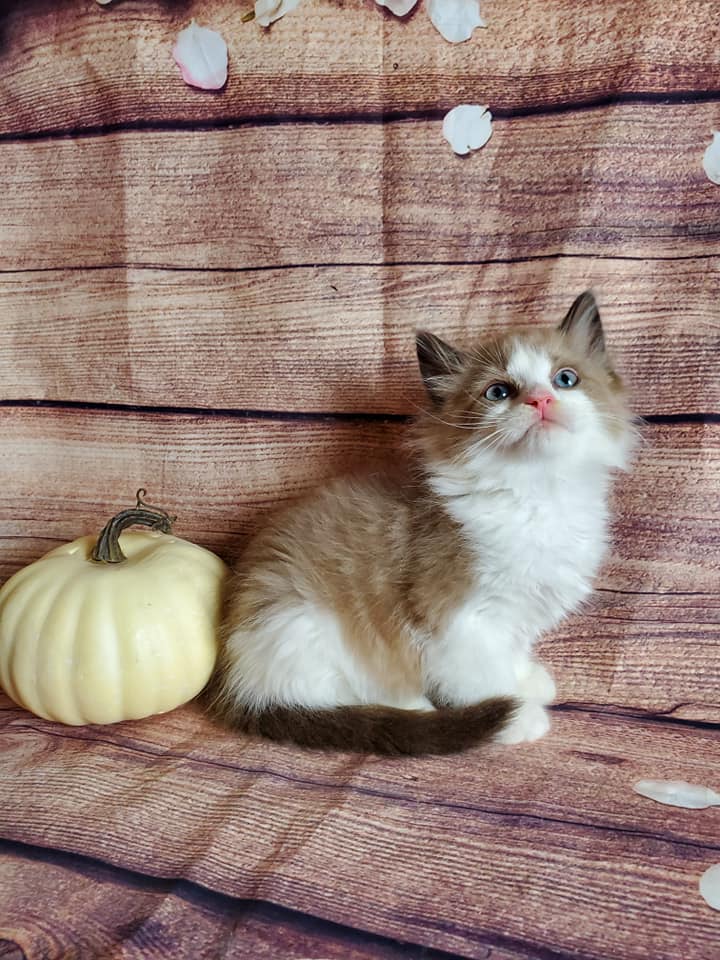
Mitted, Bicolor, and Colorpoint Ragdoll Markings
Ragdolls are famous for their vivid blue eyes, gentle personalities, and soft, color-pointed coats. Their markings can look similar at first glance, yet the pattern on a kitten’s face, legs, chest, and feet determines whether the cat is colorpoint, mitted, or bicolor.
Learning the differences helps prospective families understand how a Ragdoll kitten may develop as it matures. Ragdoll colors and markings become more visible during the first weeks and months of life, so early photographs may not show the finished pattern clearly.
At Ragdoll Kittens Cattery in Helena, Montana, kittens are raised indoors in a family environment and handled daily. Along with learning about appearance, families can consider temperament, health screening, and whether a kitten is suited to life as a companion or therapy cat.
How Ragdoll Pointed Color Develops
Ragdolls are born with pale coats because their color-point gene is temperature-sensitive. As the kitten grows, cooler areas of the body—such as the ears, face, legs, and tail—develop deeper pigment. The body generally remains lighter than the points.
Common Ragdoll colors include seal, blue, chocolate, lilac, flame, and cream. Some cats also have lynx striping or tortie coloring layered over the primary pattern. These overlays can create additional visual variety without changing the basic classification of colorpoint, mitted, or bicolor.
All traditional Ragdolls have blue eyes, although the intensity may range from light blue to a deep sapphire shade. Coat pattern and color can influence the overall impression, but neither determines a kitten’s personality. Socialization, breeding, and individual temperament remain important factors.
Recognizing The Colorpoint Pattern
A colorpoint Ragdoll has darker ears, mask, legs, and tail, with no intentional white markings on the paws or face. The chest and underside are usually lighter, creating the classic contrast associated with pointed cats. The mask may become more defined as the kitten matures.
Because colorpoint cats lack white mittens and a white facial blaze, their markings often appear more symmetrical and streamlined. Seal colorpoints have rich brown-black points, while blue colorpoints show a softer slate-gray contrast. Dilute shades such as lilac produce a pale, delicate appearance.
Colorpoint does not mean a cat has less personality or a different breed quality. It simply describes the distribution of pigment. A well-bred colorpoint Ragdoll should still display the breed’s substantial build, silky coat, blue eyes, and typically affectionate nature.
Identifying Mitted Ragdolls
Mitted Ragdolls have white markings on the front paws and hind legs, resembling small gloves or socks. They typically retain darker colored legs above the white areas, while the body, ears, face, and tail show the underlying point color.
A classic mitted pattern also includes a white chin and chest. Many mitted Ragdolls have a white stripe extending from the chin down the belly, although the exact shape and width can vary. Some may have a facial blaze, but a blaze is not required for every mitted kitten.
The contrast between dark points and white paws makes this pattern especially recognizable. Since kitten markings can change in clarity as the coat develops, experienced breeders evaluate the overall pattern rather than relying on a single early photograph.
Understanding The Bicolor Pattern
Bicolor Ragdolls have more extensive white than mitted cats. The most recognizable feature is a white, inverted-V marking on the face. The ears and upper portion of the mask remain colored, while the muzzle and lower face are white.
White usually extends across the chest, belly, and legs. The back may show a colored saddle or patches of point color, creating a striking contrast between the darker upper body and lighter underside. Bicolor markings can vary in width and symmetry, especially while a kitten is growing.
A bicolor kitten may look quite different from its adult self during the early weeks. Families interested in a particular appearance should review the parents, previous litters, and the breeder’s explanation of expected development rather than choosing from a newborn photograph alone.
Comparing The Three Main Patterns
The easiest way to distinguish these Ragdoll coat patterns is to examine the paws, face, and amount of white. A colorpoint has no white pattern, a mitted cat has white paws and usually a white chin, and a bicolor has broader white areas with an inverted-V facial marking.
Lynx or tortie details can occur within these pattern categories. For example, a seal lynx mitted Ragdoll may have tabby striping over its dark points, while a tortie bicolor may show patches of cream or red mixed into the darker areas.
| Pattern | Face | Paws And Legs | Body White | Typical Visual Impression |
|---|---|---|---|---|
| Colorpoint | Colored mask with no white blaze | Fully colored points | Little or no pattern white | Clean, classic pointed contrast |
| Mitted | Colored mask, sometimes with a blaze | White front paws and rear socks | White chin, chest, and often belly stripe | Dark points with glove-like feet |
| Bicolor | White inverted-V facial marking | White legs are common | Broad white chest, belly, and underside | High-contrast, balanced appearance |
Choosing A Kitten Beyond Coat Pattern
Markings are an appealing part of selecting a Ragdoll, but health and temperament should receive equal attention. Responsible breeders screen for conditions relevant to the breed and provide clear information about veterinary care, vaccination, registration, and the kitten’s early development.
A family may also want to discuss whether a kitten is intended as a household pet, a future breeding cat, or a therapy companion. A calm, well-socialized kitten raised around normal household activity may be a good fit for many homes, but each placement should be based on the individual kitten’s behavior and needs.
Before adoption, families can focus on these priorities:
- Review the kitten’s pedigree, registration details, and expected adult color.
- Ask how the parents have been screened for HCM, FIV, FeLV, and feline heartworm disease.
- Observe whether the kittens are handled gently and regularly in a clean, cage-free environment.
- Discuss grooming, nutrition, veterinary visits, and lifelong care requirements.
- Choose temperament and health alongside the preferred Ragdoll pattern.
Finding The Right Ragdoll Match
A mitted kitten may appeal to families who love white paws, while a bicolor may stand out for its bright facial blaze and larger areas of white. Colorpoint Ragdolls offer the traditional pointed appearance that many people associate with the breed. Each pattern has its own character visually, yet all three can produce the soft, elegant look Ragdolls are known for.
Ragdoll Kittens Cattery offers limited placements for families seeking loving pets or potential therapy cats. Contact the Helena, Montana cattery to learn about available litters, health practices, color and marking expectations, and the adoption process for a well-socialized Ragdoll companion.