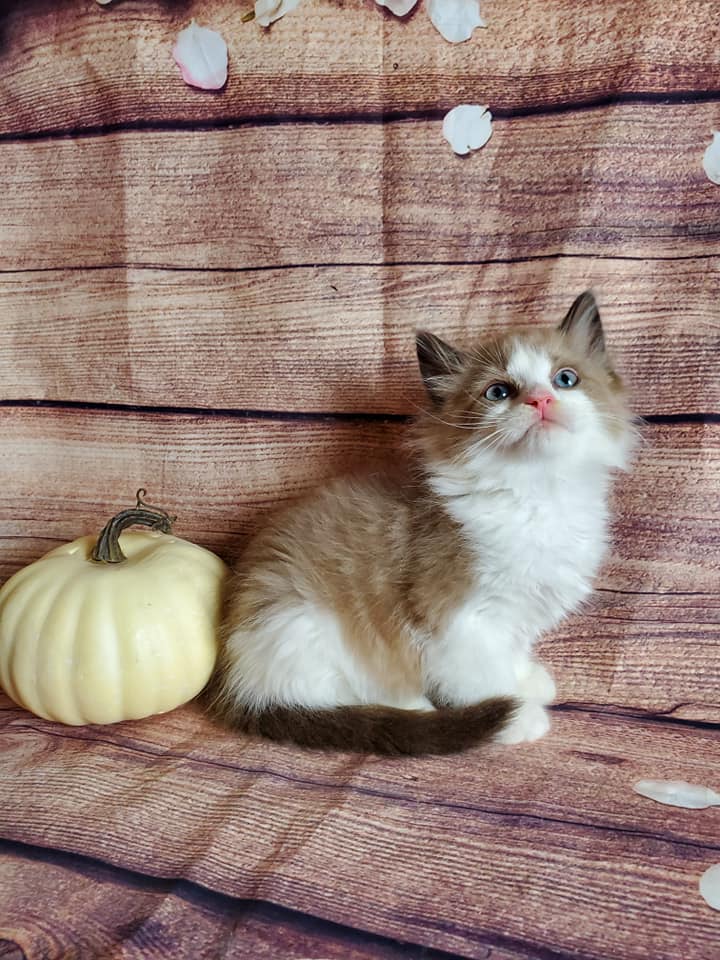
Ragdoll Cat Weight: Healthy Ranges and Weight Management
Ragdolls are known for their substantial size, slow development, and soft, muscular bodies. Their relaxed temperament can make them seem heavier than they are, while their long coat may hide gradual changes in body condition. A healthy Ragdoll cat weight depends on age, sex, frame, muscle mass, and overall shape rather than a single number on the scale.
Most Ragdolls continue filling out well beyond their first birthday and may reach full maturity between three and four years of age. Kittens should gain steadily, while adult cats should maintain a stable weight with a visible waist and easily felt ribs.
At Ragdoll Kittens Cattery in Helena, Montana, kittens are raised indoors in a cage-free family setting and handled daily. This early socialization supports healthy routines, including comfortable handling for weighing, grooming, nail care, and veterinary visits.
Understanding The Ragdoll Body
Ragdolls are a large, semi-longhaired breed with a sturdy bone structure. Adult males are usually larger than females, although individual cats can fall outside common breed ranges. A compact, muscular female may weigh more than a slender male without being overweight.
Their coat can also create a misleading impression. A full ruff, feathered legs, and a fluffy tail add visual volume but do not necessarily indicate excess fat. Running your hands over the cat’s chest, ribs, spine, and hips gives a better assessment than appearance alone.
Growth is gradual in this breed. A young Ragdoll may look lanky during adolescence before developing a broader chest and fuller body. Restricting food to force a kitten into an adult shape can interfere with normal growth and should be avoided unless directed by a veterinarian.
Healthy Weight Ranges By Life Stage
There is no universal ideal weight for every Ragdoll. The ranges below provide general guidance for a healthy purebred cat, but a veterinarian should assess each cat’s body condition, muscle tone, and development.
| Life stage | Typical weight guidance | What to watch |
|---|---|---|
| Young kitten, 8–12 weeks | About 2–4 lb | Steady growth, energy, and regular eating |
| Older kitten, 4–6 months | About 5–8 lb | Healthy muscle development without a round belly |
| Juvenile, 7–12 months | About 7–12 lb | Gradual growth and an identifiable waist |
| Adult female | About 10–15 lb | Rib coverage, mobility, and stable condition |
| Adult male | About 15–20 lb | Muscle mass, waist shape, and joint comfort |
| Mature or senior cat | Individual range varies | Preservation of muscle and prevention of hidden weight loss |
These figures are broad estimates rather than targets. A large-framed adult may be healthy above the typical range, while a smaller Ragdoll may be overweight within it. Comparing a cat’s weight over time is often more useful than comparing it with another cat.
Body Condition Matters More Than The Scale
A healthy Ragdoll should have ribs that are easy to feel beneath a thin layer of fat. The ribs should not be sharply visible, but they should not require firm pressure to locate. Viewed from above, the cat should show a gentle waist behind the rib cage. From the side, the abdomen should rise slightly toward the hind legs rather than hang heavily.
A rounded abdomen, thick padding over the ribs, or a broad back with no waist can indicate excess body fat. Conversely, prominent ribs, a sharply visible spine, reduced muscle over the hips, or a sudden loss of shape may signal underweight or illness. Long fur can conceal both conditions, so regular hands-on checks are important.
Veterinary teams often use a body condition score, commonly rated from very thin to obese. Ask the veterinarian to demonstrate the ideal score for your particular Ragdoll and to weigh the cat during routine examinations. This creates a reliable baseline for future changes.
Feeding A Growing Ragdoll
Ragdoll kittens need a complete, balanced diet formulated for growth. High-quality kitten food supplies the calories, protein, vitamins, and minerals needed for bones, muscles, and normal development. Fresh water should be available at all times, and meals should be portioned according to the kitten’s age, size, activity, and the food’s calorie content.
Free-choice feeding can work for some young kittens, but it may encourage overeating as a Ragdoll matures. Measured meals make it easier to monitor appetite and adjust portions. Treats should remain a small part of daily calories, particularly for indoor cats with limited activity.
Adult food should be introduced gradually when the veterinarian or feeding guide indicates that the cat is ready. Sudden diet changes can cause digestive upset. Wet food may support hydration and portion control, while dry food can be useful when measured carefully; the best plan depends on the cat’s health, preferences, and household routine.
Weight Changes That Need Attention
A gradual increase may result from excessive portions, frequent treats, reduced activity, or transition into adulthood. Weight loss can be equally important, especially when it occurs without a deliberate diet change. Dental pain, digestive disease, parasites, diabetes, kidney disease, thyroid problems, and other conditions can affect appetite or body condition.
Health screening is part of responsible Ragdoll care. Ragdoll Kittens Cattery emphasizes testing and veterinary attention related to HCM, FIV, FeLV, and feline heartworm disease. Screening does not replace routine examinations, but it supports informed decisions about a kitten’s health and future care.
Contact a veterinarian promptly if a cat stops eating, loses weight quickly, vomits repeatedly, develops persistent diarrhea, drinks or urinates much more than usual, becomes unusually tired, or has difficulty moving. Never place a kitten or adult cat on a strict weight-loss plan without professional guidance, since rapid calorie restriction can be dangerous.
Practical Habits For Lifelong Weight Control
Healthy weight management is easiest when it becomes part of everyday care. Indoor enrichment, climbing structures, wand play, food puzzles, and short interactive sessions help a Ragdoll stay active without overwhelming its calm personality.
- Weigh kittens regularly during growth and record the results for veterinary visits.
- Measure every meal instead of estimating portions by eye.
- Check the ribs and waist beneath the coat at least once each month.
- Keep treats occasional and include them in the daily calorie allowance.
- Schedule routine examinations to monitor weight, muscle, teeth, and mobility.
A family-raised kitten can learn that handling, weighing, and grooming are normal experiences. That foundation makes it easier to identify changes early and maintain a healthy routine throughout adulthood. For guidance about available Ragdoll kittens, expected development, and preparing for life with a new companion, contact Ragdoll Kittens Cattery in Helena, Montana.