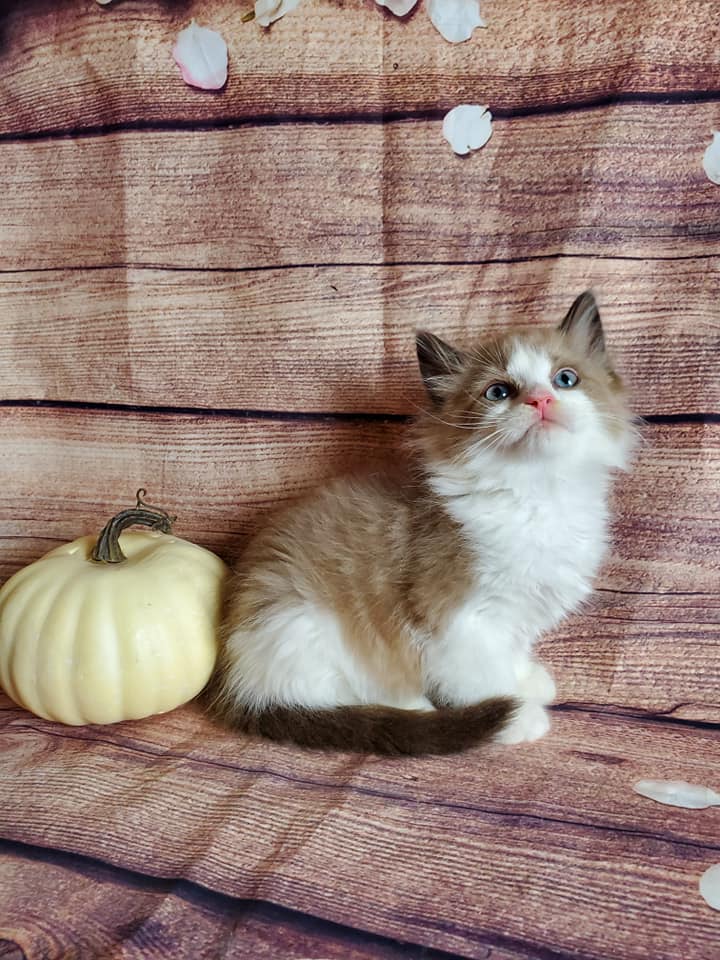
The Complete Guide to Ragdoll Kitten Colors and Patterns
Ragdoll kittens are known for their gentle personalities, vivid blue eyes, and beautifully soft coats. Their coloring is especially distinctive because the breed develops pointed markings: the ears, face, legs, and tail become darker than the body. This contrast creates the classic Ragdoll appearance while allowing a surprising range of shades and patterns.
A kitten’s coat can change significantly during its first months. Many Ragdolls are born very pale, and their points gradually deepen as they mature. Temperature-sensitive color genes influence this process, which is why cooler areas of the body show more pigment.
At Ragdoll Kittens Cattery in Helena, Montana, kittens are raised indoors in a cage-free family environment and handled daily. Learning how color, pattern, temperament, and health fit together can help families choose a kitten that suits their home.
How Ragdoll Color Develops
Ragdoll coloring is associated with the colorpoint gene. This gene limits pigment in warmer areas of the body, while cooler areas develop darker coloration. As a result, the face, ears, paws, and tail usually show the strongest color.
Newborn Ragdoll kittens may appear nearly white or have only faint markings. Their points become easier to identify over the following weeks, although the final shade may continue developing for several years. Seasonal temperature changes can also affect how dark the coat appears.
All traditional Ragdolls have blue eyes, ranging from light icy blue to a deeper sapphire shade. Eye color should be clear and expressive, but families should evaluate a kitten’s overall health and structure rather than choosing by eye shade alone.
Recognized Ragdoll Color Varieties
Seal is the deepest and most familiar Ragdoll color. Its points range from dark brown to nearly black, creating strong contrast against a warm cream or ivory body. Blue Ragdolls have cool slate-gray or blue-gray points and a softer overall appearance.
Chocolate points are a rich, warm brown, while lilac points are a diluted version of chocolate with a pale, frosted tone. These colors are usually lighter and less dramatic in contrast than seal or blue, but they are highly sought after for their delicate appearance.
Red and cream Ragdolls bring warm orange, apricot, or pale buff shades to the breed. Tortoiseshell coloring may combine red or cream with seal, blue, chocolate, or lilac. Because tortie patterns are linked to sex chromosomes, most tortie Ragdolls are female.
| Color | Typical Point Shade | Overall Impression |
|---|---|---|
| Seal | Deep brown to near-black | Rich, high contrast |
| Blue | Slate or blue-gray | Cool and softly shaded |
| Chocolate | Warm milk chocolate | Gentle, earthy tones |
| Lilac | Pale gray-pink or frosted beige | Light and subtle |
| Red | Orange to warm copper | Bright and vivid |
| Cream | Soft apricot or buff | Pale and warm |
| Tortie | Mixed dark and red or cream areas | Varied and expressive |
Color names can look slightly different in photographs, natural light, and indoor lighting. A reputable breeder can explain the expected adult shade using the kitten’s parents, pedigree, and developing coat.
Ragdoll Coat Patterns Explained
Colorpoint Ragdolls have darker ears, mask, legs, and tail, with no significant white markings. The body remains lighter, although mature cats may develop a deeper body tone. This is the classic pointed pattern most people associate with the breed.
Mitted Ragdolls have white mittens on the front paws and white boots on the rear legs. They may also have a white chin, a white stripe or blaze on the face, and a white belly stripe. The pattern should be balanced, but small variations are natural.
Bicolor Ragdolls have more extensive white than mitted cats. Their face often includes an inverted V of white, while the ears and upper mask retain color. The body may have a white chest and legs, and the back can show patches of the point color.
Lynx, Tortie, And Torbie Markings
Lynx markings add tabby stripes or bars to a colorpoint, mitted, or bicolor coat. These markings are often visible as lines on the face, rings on the tail, and striping on the legs. A seal lynx point, for example, combines dark seal coloring with a clear tabby pattern.
Tortie Ragdolls have a blend of two color families, such as seal and red or blue and cream. The mixture may appear as scattered patches, streaks, or mottling on the mask, body, legs, and tail. Each tortie pattern is individual, which makes these cats especially distinctive.
A torbie is a tortoiseshell lynx pattern, combining tabby striping with red or cream patches. The markings may become easier to see as the kitten grows. Pattern clarity can vary, and a young kitten may not show the full adult expression of its coat.
Matching A Pattern To Your Home
Every color and pattern can make a wonderful companion. Families should consider personality, activity level, grooming needs, and household routines along with appearance. Ragdolls are generally affectionate, social cats that often enjoy being near people, making early handling and positive family interaction valuable.
A kitten raised in a calm, engaging environment receives important social experiences before adoption. Daily handling, exposure to ordinary household sounds, and gentle play can help support confidence. Color does not determine whether a Ragdoll will be cuddly, playful, independent, or suited to therapy work.
At a TICA-registered cattery, prospective families can ask about registration, parentage, health screening, vaccination records, and the kitten’s development. Ragdoll Kittens Cattery emphasizes screening for HCM, FIV, FeLV, and feline heartworm disease as part of responsible kitten placement.
What To Check Before Choosing
Photos are helpful, but they cannot always show subtle differences between blue and lilac, or between cream and pale red. Seeing updated images, learning about the parents, and discussing the kitten’s markings with the breeder gives a more accurate picture of its expected appearance.
The most responsible selection process also includes practical questions about care and readiness:
- Ask whether the kitten’s color and pattern are documented through pedigree records.
- Request age-appropriate veterinary records, vaccinations, and health information.
- Learn how the kitten has been socialized with people and household activity.
- Discuss grooming, nutrition, contracts, and the recommended transition to a new home.
- Choose a kitten based on health and temperament as well as coat appearance.
Ragdoll coats require regular brushing to reduce loose hair and prevent tangles, especially around the ruff, legs, and hindquarters. A gentle grooming routine introduced early can become an enjoyable part of the relationship.
Whether you prefer a dramatic seal point, a soft blue mitted kitten, a bright red lynx, or an unusual tortie bicolor, the ideal companion is a healthy, well-socialized kitten from a transparent breeding program. Explore available Ragdoll kittens from Ragdoll Kittens Cattery and learn more about colors, patterns, health testing, and the adoption process.