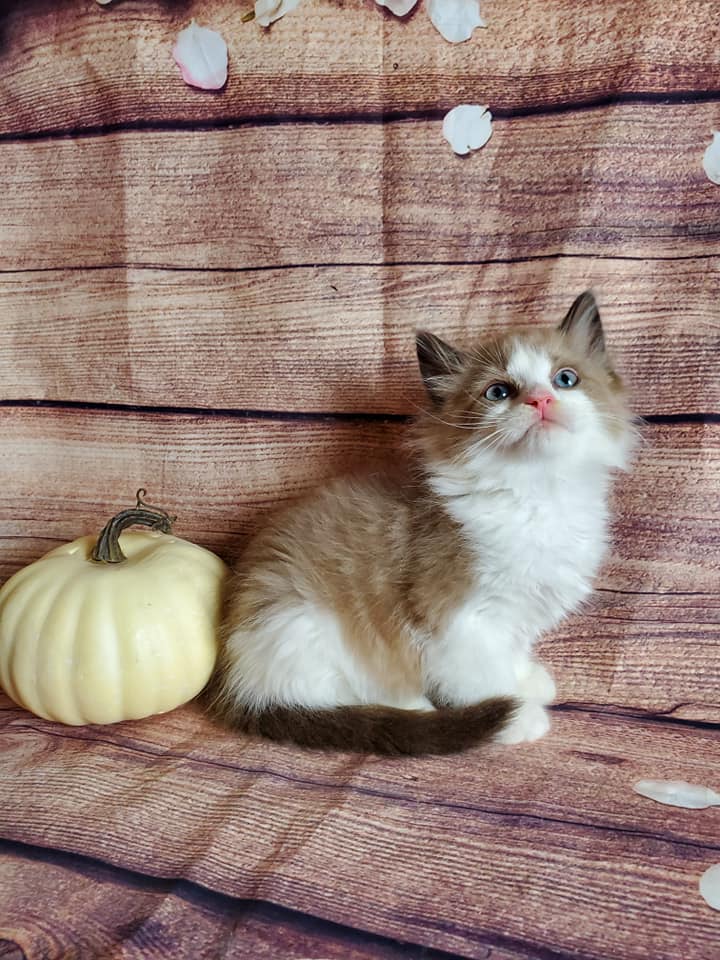
The History and Origins of the Ragdoll Breed
The Ragdoll is a relatively modern cat breed with a carefully documented beginning in 1960s California. Unlike ancient pedigreed cats whose development unfolded over centuries, the Ragdoll emerged through the focused breeding work of Ann Baker, a breeder in Riverside. Her goal was to develop a large, beautiful cat with a gentle nature and distinctive pointed coloring.
Today, Ragdolls are known for their blue eyes, soft semi-longhaired coats, substantial size, and affectionate behavior. Their history helps explain why responsible breeders pay close attention to temperament, health, pedigree records, and early socialization.
At Ragdoll Kittens Cattery in Helena, Montana, these traditions remain important. Kittens are raised indoors in a cage-free family environment, handled daily, and placed as loving pets or potential therapy companions when their personalities are a good fit.
California Beginnings In The 1960s
The breed’s foundation is generally traced to Josephine, a white longhaired domestic cat owned by Ann Baker. Josephine produced kittens with appealing temperaments and unusual physical characteristics after recovering from an accident. Baker selected several of her offspring for a controlled breeding program, establishing the early Ragdoll line.
Among the influential foundation cats were Daddy Warbucks, a seal-point male; Fugianna, a bicolor female; and Buckwheat, a dark-colored female with markings resembling those of a Burmese cat. These cats contributed to the Ragdoll’s size, coat pattern, colorpoint appearance, and famously calm disposition.
The exact ancestry behind Josephine is not fully documented by modern pedigree standards. Early accounts suggest that several domestic longhaired cats were involved, but the breed’s defining characteristics came from selective breeding rather than from a single identifiable natural mutation.
How The Ragdoll Name Became Connected With Temperament
Ann Baker chose the name “Ragdoll” to describe the way many of her cats relaxed when picked up. Some individuals became loose and comfortable in a person’s arms, creating the impression of a soft rag doll. This behavior helped make the breed memorable and contributed to its reputation as an easygoing companion.
A relaxed response, however, is not a guarantee that every Ragdoll will go completely limp. Cats have individual personalities, and a kitten’s comfort with handling depends on genetics, early experiences, and trust. Good breeders therefore socialize kittens gradually rather than expecting a particular response simply because of the breed name.
The early Ragdoll ideal combined a calm personality with a substantial body, broad head, oval blue eyes, and a silky coat that tends to mat less easily than many other longhaired coats. These features became increasingly consistent as dedicated breeders refined the type.
From Private Program To Recognized Breed
Baker initially developed her own organization and breeding rules, but disagreements eventually led other breeders to establish independent Ragdoll clubs and registries. Denny and Laura Dayton were especially influential in promoting the breed through organized standards and broader registration efforts.
The Ragdoll was accepted by major cat associations over time, including The International Cat Association, commonly known as TICA. Recognition allowed breeders to show cats, compare pedigrees, and work toward a more consistent standard for body structure, coat patterns, and temperament.
International growth followed. Ragdolls became established in Europe, the United Kingdom, Australia, and other regions, with breeders developing local programs while maintaining the breed’s original characteristics. Modern pedigrees reflect decades of selection, health awareness, and cooperation among responsible fanciers.
Color, Markings, And Breed Identity
Ragdoll kittens are born white or very pale because the breed’s colorpoint pattern develops gradually. As they mature, cooler areas of the body—such as the ears, face, legs, and tail—become darker. Temperature-sensitive pigment explains why Ragdolls living in colder conditions may show deeper coloration.
Traditional patterns include colorpoint, mitted, and bicolor. Lynx striping and tortie shading can add further variation, while recognized colors may include seal, blue, chocolate, lilac, red, and cream depending on the registry standard. A kitten’s final appearance can continue changing for several years.
| Feature | Historical Significance | What Families May Notice |
|---|---|---|
| Blue eyes | A defining feature of the traditional pointed breed | Eye color remains blue in mature cats |
| Semi-long coat | Selected for a plush, silky appearance | Regular combing helps prevent tangles |
| Colorpoint pattern | Linked to temperature-sensitive pigment | Coat color develops after birth |
| Mitted and bicolor markings | Refined through early breeding programs | White areas vary from kitten to kitten |
| Large, sturdy body | Part of the original breed type | Full size may develop slowly |
| Gentle temperament | Central to the breed’s early reputation | Socialization supports confident behavior |
Health And Socialization In The Modern Breed
The Ragdoll’s history is also a reminder that attractive traits must be balanced with sound health. Hypertrophic cardiomyopathy, or HCM, is a significant concern in the breed. A known genetic variant can be screened for, although genetic testing does not replace veterinary examinations or broader health oversight.
Responsible programs may also screen for FIV, FeLV, and feline heartworm disease, while maintaining vaccination, parasite prevention, and routine veterinary care. Health testing is most useful when it is part of a complete breeding plan that considers family history, physical structure, and long-term welfare.
Early handling reflects another important development in modern Ragdoll breeding. Kittens raised in a home environment can become familiar with household sounds, gentle touch, grooming, and ordinary routines. At a small TICA-registered hobby cattery, daily interaction helps breeders observe each kitten’s personality before recommending a suitable home.
Choosing A Ragdoll With Its History In Mind
A responsible adoption decision should focus on more than coat color or a kitten’s reputation for being affectionate. Families should learn how the kittens are raised, what health records are available, and whether the breeder offers clear guidance about nutrition, grooming, veterinary care, and transition into a new home.
Useful points to consider include:
- Ask whether the parents have appropriate HCM screening and current veterinary records.
- Learn whether kittens are raised indoors and handled regularly by people.
- Review the pedigree, registration details, contract, and health guarantee.
- Discuss whether the kitten’s temperament suits a family, quiet household, or therapy setting.
- Plan for lifelong grooming, companionship, preventive care, and routine veterinary visits.
The breed’s development was built around companionship, so a Ragdoll should be treated as a social family member rather than an ornamental pet. Time, gentle interaction, and predictable care allow the qualities selected by early breeders to thrive.
If you are exploring Ragdoll kittens in Montana, contact Ragdoll Kittens Cattery to learn about upcoming litters, health practices, available colors and markings, and the adoption process. A thoughtful conversation can help match the right kitten with a loving lifelong home.