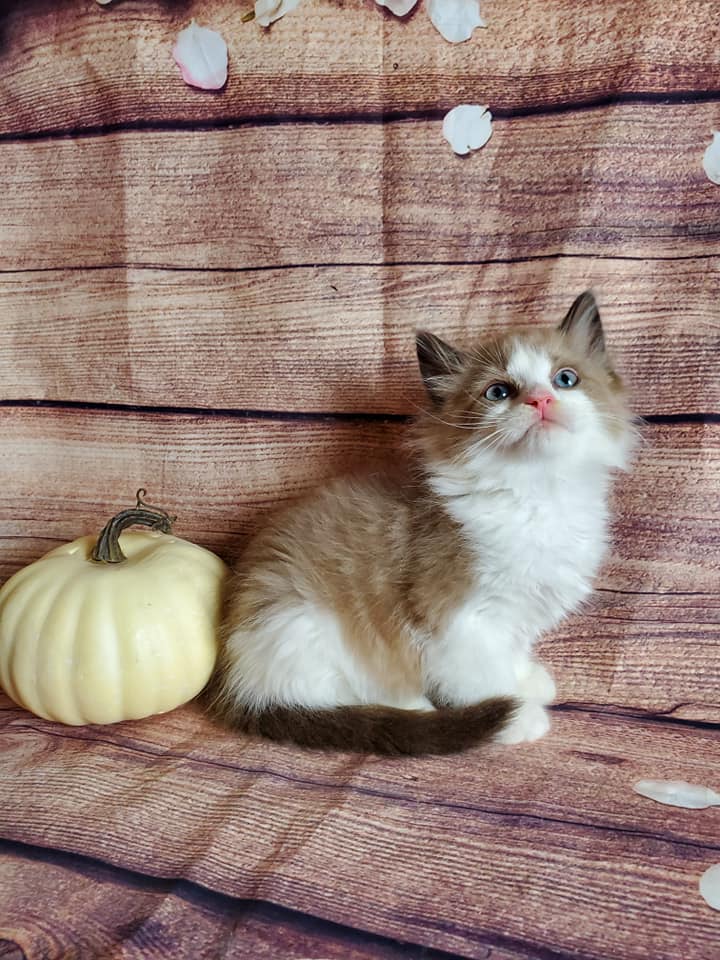
The Ragdoll Coat: Colorpoint, Mitted, And Bicolor Patterns
Ragdoll cats are known for their striking blue eyes, soft semi-longhair coats, and gentle personalities. Their coloring develops gradually, making each kitten’s appearance change during the first months of life. Understanding the pattern beneath the coat helps families recognize the differences between colorpoint, mitted, and bicolor Ragdolls.
A Ragdoll’s pattern describes where color appears and where white markings are present. The base color may be seal, blue, chocolate, lilac, flame, or cream, while lynx striping and tortoiseshell shading can add further detail. Pattern and color are separate features, so two kittens with the same pattern may look very different.
At Ragdoll Kittens Cattery in Helena, Montana, kittens are raised indoors in a cage-free family environment and handled daily. This early socialization supports the affectionate, adaptable temperament associated with the breed while families learn which coat pattern best suits their preferences.
How Ragdoll Color Develops
Ragdolls have a temperature-sensitive color gene, sometimes called the Himalayan gene. It limits pigment in warmer areas of the body, so the ears, face, legs, and tail become darker than the torso. The body remains lighter because it is naturally warmer.
Kittens are usually born very pale, often appearing almost white. Their points begin to develop during the first weeks, and the coat continues to deepen as they mature. Cooler temperatures can encourage darker shading, while an adult Ragdoll’s final color may keep changing subtly for several years.
All traditional Ragdolls have blue eyes, although the depth of blue can vary. Coat pattern does not determine personality or health. Responsible breeding, veterinary care, genetic screening, and early socialization are much more important factors.
Colorpoint Ragdolls
The colorpoint pattern is the classic pointed appearance. A colorpoint Ragdoll has darker ears, mask, legs, and tail, with no significant white markings on the paws, chin, chest, or body. The contrast between the pale body and darker points can be especially dramatic in seal and blue cats.
Seal colorpoint Ragdolls have deep brown or nearly black points, while blue points have a soft slate-gray appearance. Chocolate and lilac points are lighter, warmer variations. Flame and cream points add red or pale cream tones, creating a particularly bright facial expression.
The face may appear darker as the cat ages, and the body can develop gentle shading across the back and sides. This natural color progression is normal and does not mean the coat is losing its quality.
Mitted Ragdolls
Mitted Ragdolls have colored points combined with white mittens on the front paws and larger white boots on the hind legs. A white chin and chest are typical, and the white may extend into a stripe or line along the underside of the body. Ideally, the markings are balanced, though natural variation is expected.
Some mitted kittens have a white blaze on the nose or forehead. This facial marking can be charming, but it is not required for the pattern. The most recognizable feature is the contrast between the darker legs and the neat white paws.
Mitted Ragdolls can also carry lynx stripes or tortoiseshell coloring. For example, a seal lynx mitted may have tabby lines over the ears, face, and legs, while a tortie mitted may show warm cream or red patches mixed into the darker points.
Bicolor Ragdolls
Bicolor Ragdolls have more extensive white than mitted cats. Their faces typically display an inverted white “V” that begins around the nose and widens across the muzzle and forehead. The ears and upper portions of the face remain colored, creating a distinctive mask.
White usually covers the chest, belly, legs, and much of the underside. The back and tail retain the primary point color, although the exact boundaries vary. A well-defined inverted V is desirable in the show standard, while pet kittens may have charming variations in facial symmetry.
Because bicolor markings can be bold and expressive, this pattern is often easy to identify. Lynx and tortie overlays can still occur, adding stripes or warm-colored patches to the ears, mask, tail, and body points.
| Pattern | Typical White Markings | Overall Appearance |
|---|---|---|
| Colorpoint | Little or no white | Dark ears, face, legs, and tail against a pale body |
| Mitted | White paws, boots, chin, and chest | Pointed coloring with glove-like feet |
| Bicolor | White face, legs, chest, belly, and underside | Distinctive inverted facial V with broad white areas |
Pattern Variations And Genetics
Lynx Ragdolls have tabby markings layered over a colorpoint, mitted, or bicolor pattern. Their facial stripes, ringed tails, and leg barring can make the points look more textured. Tortie Ragdolls have a blend of darker color and red or cream patches, usually producing an individual pattern on each cat.
The pattern is inherited through several genetic factors, so a kitten’s markings cannot always be predicted by looking at one parent. Breeders evaluate pedigrees, registered lines, and established color genetics when planning litters. A kitten’s early appearance may also be misleading because the points are still developing.
White markings can vary in shape and extent, even among littermates. Families choosing a companion should focus on temperament, health, socialization, and suitability for their household rather than expecting perfectly symmetrical markings.
Choosing A Ragdoll Companion
Every pattern has its own appeal, from the clean contrast of a colorpoint to the snowy paws of a mitted or the dramatic facial mask of a bicolor. Coat pattern does not change the breed’s characteristic gentle nature, but grooming needs remain similar across all varieties.
Ragdolls have a plush, silky coat that benefits from regular combing. Weekly grooming can help reduce loose hair and prevent tangles around the ruff, legs, and hindquarters. A balanced diet, routine veterinary visits, and attention to dental care support a healthy coat and comfortable life.
When considering a kitten, useful priorities include:
- Review the cattery’s health-testing practices and veterinary records.
- Ask how kittens are handled and socialized before adoption.
- Learn whether the kitten is intended as a pet, show prospect, or therapy companion.
- Discuss expected adult color development and pattern variation.
- Choose a breeder who provides clear adoption information and ongoing support.
Families seeking a purebred Ragdoll kitten can learn more about available colors, markings, health screening, and adoption at Ragdoll Kittens Cattery. Contact the cattery to discuss upcoming litters and find a lovingly raised companion whose temperament and coat pattern fit your home.