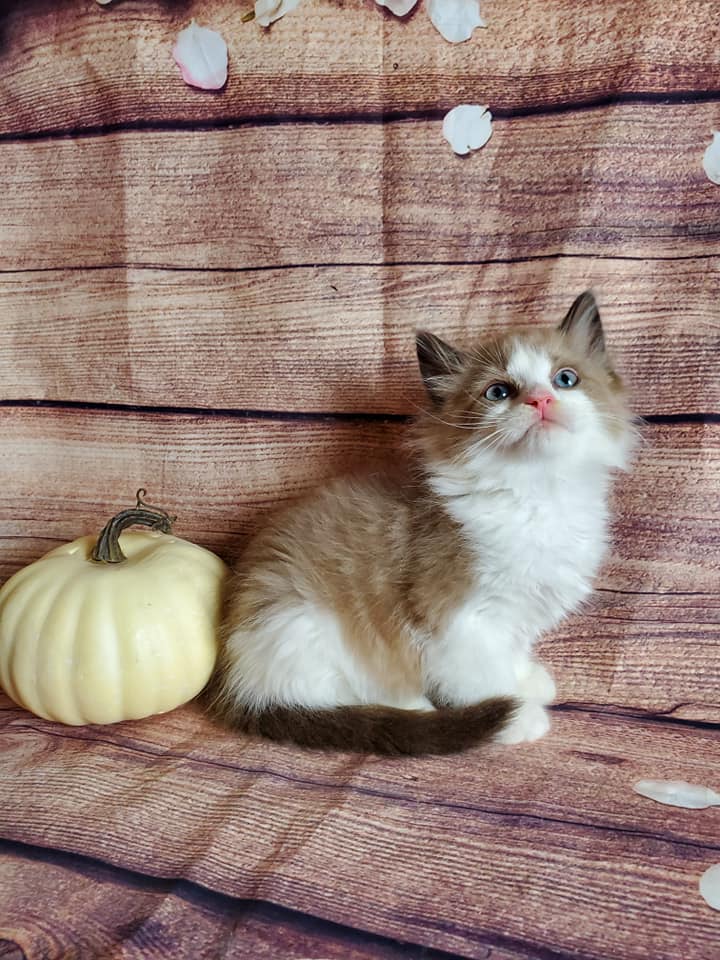
The Ragdoll’s Blue Eyes: Genetics and Care
Ragdoll cats are famous for their striking blue eyes, gentle temperament, and colorpoint coats. Their eye color is a defining breed trait, appearing in shades that range from pale ice blue to rich sapphire. The color remains vivid throughout adulthood when the cat has the traditional pointed pattern.
Blue eyes in Ragdolls are the result of inherited pigmentation genetics rather than a special care requirement. Understanding how this trait develops helps families appreciate normal changes and recognize signs that deserve veterinary attention.
At Ragdoll Kittens Cattery in Helena, Montana, kittens are raised indoors in a cage-free family setting and handled daily. This early socialization gives prospective families a chance to observe each kitten’s eyes, coat, behavior, and overall development before adoption.
Why Ragdolls Have Blue Eyes
The Ragdoll’s blue eyes are connected to the breed’s colorpoint gene. This gene affects the activity of tyrosinase, an enzyme involved in producing melanin, the pigment responsible for color in the eyes, skin, and fur. In Ragdolls, the enzyme is temperature-sensitive, so pigment develops more strongly in cooler areas of the body.
The iris contains very little melanin, allowing light to scatter through its structure and create the blue appearance. This is similar to the way blue skies appear blue: the color comes from light behavior rather than blue pigment stored in the eye.
Traditional Ragdolls with pointed markings are expected to have blue eyes under breed standards. Coat colors such as seal, blue, chocolate, lilac, flame, and cream can all occur with blue eyes because the eye color is tied to the pointed pattern rather than to one particular coat shade.
How Eye Color Develops
Ragdoll kittens are generally born with blue eyes, although the shade may look soft or muted during the first weeks of life. As the kitten grows, the eyes become clearer and more distinctive. Their final tone may continue settling during early kittenhood, so a young kitten’s eye color should be viewed as part of a developing picture.
The coat also changes gradually. Colorpoint kittens are born very pale because the mother’s warm womb limits pigment production. As they encounter cooler temperatures, their ears, face, legs, and tail begin to darken. This temperature-sensitive process explains why a Ragdoll’s blue eyes and shaded points develop alongside the kitten’s growth.
| Feature | Typical Ragdoll Pattern | Worth Veterinary Attention |
|---|---|---|
| Iris color | Blue, from pale aqua to deep sapphire | Sudden color change or cloudy appearance |
| Pupils | Round pupils that respond to light | Unequal pupils or poor light response |
| Eye surface | Clear and moist | Excessive discharge, redness, swelling, or a visible film |
| Coat points | Darker ears, face, legs, and tail | Rapid unexplained fur loss or skin changes |
| Vision and behavior | Confident movement and normal play | Bumping into objects, squinting, or avoiding light |
Everyday Care for Blue Eyes
Blue-eyed Ragdolls do not need a special diet or eye product simply because their irises are blue. Good nutrition, clean living spaces, parasite prevention, and routine veterinary care support eye health just as they support the rest of the body. Indoor living also reduces exposure to injuries, infectious disease, and environmental irritants.
Families can gently inspect the eyes during regular handling. A small amount of clear moisture can be normal, but thick discharge, persistent tearing, crusting, redness, or frequent squinting should be evaluated. Use a soft, damp cloth for surface cleaning and avoid human eye drops unless a veterinarian specifically prescribes them.
When preparing for adoption, families should also plan a calm transition. Reviewing guidance on bringing home a Ragdoll can help owners create a quiet room, introduce the kitten gradually, and observe eating, litter box use, and comfort during the first days.
Vision, Genetics, and Health
Blue eyes themselves do not mean a Ragdoll has poor vision. The pointed gene responsible for their coloration is different from the genetic mechanisms commonly associated with deafness in some white cats. A blue-eyed Ragdoll can see normally and enjoy climbing, play, and interaction with the household.
Even so, eye appearance should be considered alongside general health. Responsible breeders screen their cats and maintain veterinary records rather than judging wellness by eye color alone. At a small, TICA-registered hobby cattery, health testing may include screening for hypertrophic cardiomyopathy, FIV, FeLV, and feline heartworm disease.
A kitten’s eyes should be clear, symmetrical, and free from persistent discharge when it goes home. Families should receive health information, vaccination and deworming records, and practical advice about follow-up care. A veterinary examination after adoption provides an additional opportunity to establish a baseline for the kitten’s eyes and overall development.
Creating a Comfortable Home
A Ragdoll’s eyes are well suited to ordinary indoor life, but a safe home still matters. Keep dusty litter, strong cleaning fumes, smoke, and aerosol sprays away from the kitten’s living area. Wash bedding regularly and choose low-dust litter when possible, especially if the kitten shows repeated tearing or sneezing.
Daily interaction can make eye observation easy and positive. During gentle play or grooming, notice whether both pupils appear similar and whether the kitten follows movement comfortably. Never force the eyelids open or restrain a kitten for a prolonged inspection.
Ragdolls are social cats, so emotional wellbeing is part of good care. Predictable routines, family contact, climbing areas, scratching posts, and age-appropriate play help kittens remain relaxed and confident. A calm kitten is also easier to monitor when a health change occurs.
Practical Care Priorities
A simple routine can protect the kitten’s comfort while helping owners identify changes early.
- Schedule an initial veterinary examination and maintain recommended wellness visits.
- Check the eyes briefly each day for redness, swelling, cloudiness, or unusual discharge.
- Clean only the surrounding fur with a soft damp cloth; avoid unapproved medications.
- Keep indoor spaces free from smoke, harsh fumes, and excessive dust.
- Record changes in eye appearance, appetite, behavior, or vision before contacting the veterinarian.
Choosing a Ragdoll kitten involves more than selecting the most intense blue eyes. Families should consider temperament, health documentation, socialization, coat pattern, and whether the kitten is intended as a companion or therapy cat. Eye color is beautiful, but it is one part of a healthy, well-adjusted kitten.
A carefully raised kitten, appropriate veterinary care, and attentive daily observation allow those blue eyes to remain one of the breed’s most captivating features. Contact Ragdoll Kittens Cattery to learn about available litters, health practices, and the process for welcoming a Ragdoll companion into your home.