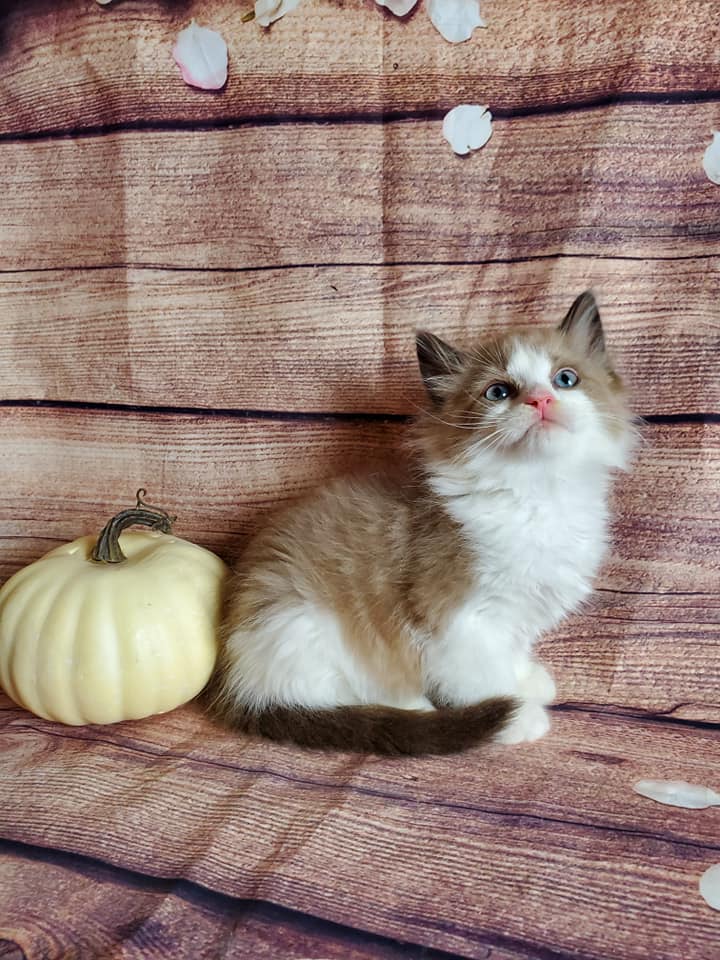
The role of genetics in Ragdoll color development
Ragdoll coat color is shaped by several interacting genes rather than a single color switch. These genes influence pigment production, dilution, pattern, and the distinctive pointed appearance associated with the breed. Understanding that process helps families know what to expect as a kitten grows.
Ragdoll kittens are often born with very pale coats because the gene responsible for their colorpoint pattern is temperature-sensitive. Their ears, face, legs, and tail gradually become darker as they mature, while the warmer central areas of the body remain lighter.
At Ragdoll Kittens Cattery, color is one part of evaluating a kitten, alongside health, temperament, socialization, and suitability as a loving pet or therapy companion. A kitten’s future appearance can often be estimated through parentage and breed knowledge, although nature may still provide small surprises.
Genetics starts with the colorpoint pattern
The classic Ragdoll appearance comes from a recessive colorpoint gene, commonly written as cs. A kitten generally needs to inherit a copy from both parents to display pointed coloring. This gene limits the production of dark pigment in warmer areas of the body.
Because the pattern is recessive, two colorpoint Ragdolls will produce pointed kittens, while a cat carrying the gene may pass it along without showing the same pattern if paired with a non-pointed cat. Breeders use pedigrees and genetic information to understand these possibilities before planning a litter.
The pointed gene affects coat pigmentation, not a kitten’s personality. Ragdolls are known for their gentle, people-oriented nature because of inherited temperament traits, early handling, and careful socialization rather than coat color alone.
Why Ragdoll kittens change as they grow
The colorpoint gene affects tyrosinase, an enzyme involved in melanin production. This enzyme works more efficiently in cooler parts of the body. As a result, the extremities develop visible pigment while the warmer torso stays pale or creamy.
Newborn Ragdolls may look nearly white, especially when they are kept warm. Over the first weeks and months, the points become easier to see. Seal points usually develop deep brown coloring, blue points become soft gray, and red or cream points take on warmer shades.
Temperature can influence how dark a pointed cat appears. Older cats, cats living in cooler conditions, or cats with less body heat may show darker body shading. This is a natural expression of the temperature-sensitive pigment gene, not a sign that the cat’s color is changing randomly.
Genes behind familiar Ragdoll shades
Seal is associated with the darkest traditional brown pigment, while blue results when the dilution gene lightens black-based pigment. Chocolate comes from a different form of the brown pigment gene, and lilac is the diluted expression of chocolate. These combinations explain why closely related kittens may mature into noticeably different shades.
Red and cream are connected to the orange gene, which is carried on the X chromosome. Male cats typically have one X chromosome, so they are often either red-based or non-red-based. Female cats can inherit different versions from each parent and may display tortie coloring, with a blend of red or cream and another base color.
| Ragdoll shade or effect | Main genetic influence | Typical appearance |
|---|---|---|
| Seal point | Dense dark pigment | Deep brown points |
| Blue point | Dilution of black-based pigment | Cool gray-blue points |
| Chocolate point | Chocolate pigment variant | Warm milk-chocolate points |
| Lilac point | Diluted chocolate | Pale pinkish-gray points |
| Red point | Orange gene | Creamy orange to rich flame points |
| Cream point | Diluted red pigment | Soft ivory or pale cream points |
| Lynx effect | Tabby pattern genes | Stripes or bars within the points |
| Tortie effect | X-linked color inheritance | Mixed red or cream and another color |
Patterns add another layer of variation
Ragdoll markings include colorpoint, mitted, bicolor, lynx, and tortie expressions. The mitted pattern places white on the paws and often creates a chin or chest marking. Bicolor cats have more extensive white, commonly forming an inverted “V” on the face and a lighter underside.
White spotting is influenced by pattern genes and can vary in how clearly it appears. Even kittens from the same parents may show different amounts or shapes of white. Mitted and bicolor markings can be particularly difficult to predict with absolute precision because several genetic factors may contribute.
Lynx markings add tabby stripes to the colored points. Tortie patterns create a mixture of shades, often producing individual facial markings that make each kitten distinctive. These patterns can occur alongside the main color families rather than replacing them.
What pedigrees can tell breeders
A Ragdoll breeder can use the colors, patterns, and genetic backgrounds of parents to estimate possible kitten outcomes. A pedigree may reveal whether a cat carries chocolate, dilution, lynx, or other recessive traits. DNA testing can provide additional information for selected traits, although appearance still depends on how multiple genes interact.
Prediction is especially useful when a cattery has a specific goal, such as preserving traditional Ragdoll colors or producing a balanced range of pet kittens. It remains an estimate rather than a guarantee. Development, lighting, coat length, and age can all affect how a color looks in photographs and in person.
At a small hobby cattery, careful records help connect visible traits with family history. This gives adopters a clearer explanation of why a kitten may develop darker points, lighter pigment, or a particular pattern as it matures.
Color genetics and responsible breeding
Coat color should never take priority over health. Ragdoll breeders should consider screening for inherited and infectious conditions, including hypertrophic cardiomyopathy risk, FIV, FeLV, and feline heartworm disease where appropriate. The gene or genes associated with color are separate from the testing and veterinary care used to protect long-term wellbeing.
Health screening does not predict every future condition, but it supports more informed breeding decisions. Kittens also benefit from clean indoor care, veterinary oversight, daily handling, and gradual exposure to normal household activity. These experiences help shape a confident companion regardless of whether the kitten becomes seal, blue, chocolate, lilac, red, cream, lynx, or tortie.
Choosing a kitten with the whole picture in mind
Families considering a Ragdoll kitten can use color information as a helpful guide while giving equal attention to health records and temperament. Useful points to review include:
- Ask which colors and patterns are possible from the parents.
- Request information about health screening and veterinary care.
- Look for kittens raised indoors with regular, gentle handling.
- Consider temperament and household fit before selecting a color.
- Expect pointed markings to develop gradually after birth.
A well-socialized kitten can become a devoted family pet or a promising therapy companion when its temperament and training needs match the home. Color may be the first feature that catches someone’s eye, but responsible breeding and early care have a much greater effect on the quality of the relationship.
To learn about available Ragdoll kittens, expected colors, markings, health practices, and the adoption process, contact Ragdoll Kittens Cattery in Helena, Montana. Our TICA-registered hobby cattery raises purebred Ragdolls in a cage-free family environment and places limited kittens with families prepared to offer lifelong care.