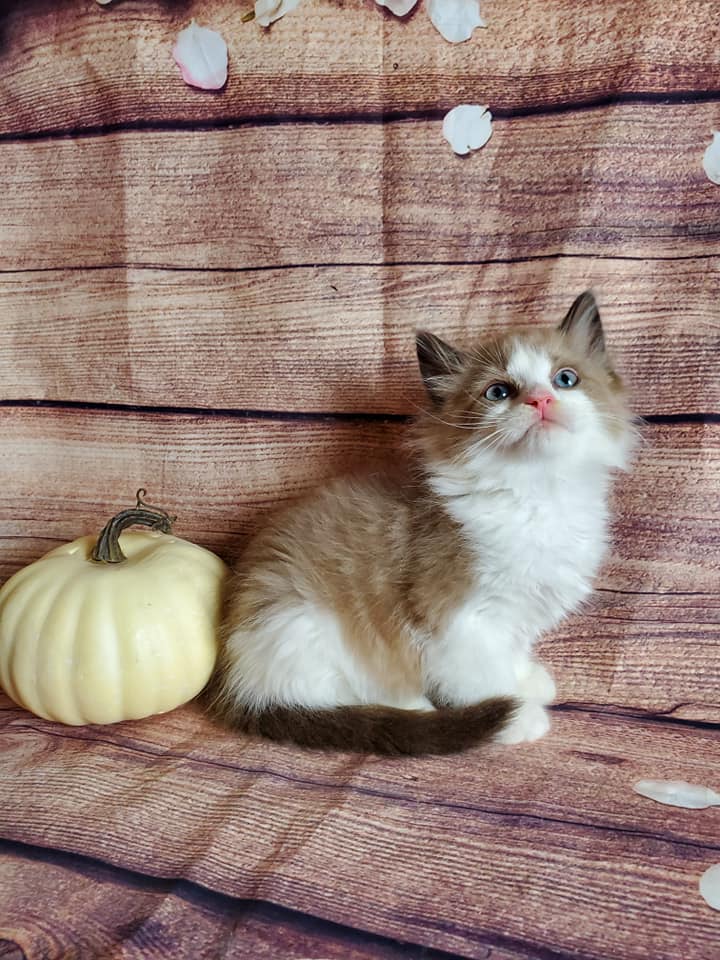
Understanding a Ragdoll kitten’s first heat cycle
A Ragdoll kitten’s first heat cycle, also called estrus, is a normal stage of feline development. It signals reproductive maturity, but it does not necessarily mean that a young cat is physically or emotionally ready for pregnancy. Because Ragdolls are slow-maturing, their timing can vary considerably.
For families adopting a pet kitten, understanding the signs of heat helps prevent worry and accidental breeding. It also makes it easier to choose the right time for spaying, prepare the home, and support a young female cat calmly and safely.
At Ragdoll Kittens Cattery, kittens are raised indoors in a family environment and handled daily. This early socialization can help them adjust to normal household routines, although hormonal behavior may still appear as a kitten approaches maturity.
When a Ragdoll may enter heat
Most female cats experience their first heat between five and twelve months of age. Some Ragdolls begin later, particularly if they mature gradually, while others may show signs earlier. Seasonal daylight, genetics, body condition, and exposure to intact male cats can all influence the timing.
A kitten does not need to have a litter before being spayed. In fact, many veterinarians recommend sterilization before the first heat when appropriate for the individual cat. Your veterinarian can consider her weight, general health, development, and household circumstances when recommending a procedure date.
Heat cycles may occur repeatedly during the breeding season if a female does not mate. Indoor cats exposed to artificial lighting may cycle at different times of year, so owners should not rely on the calendar alone to predict fertile periods.
Recognizing the signs of estrus
Unlike people, cats do not have menstrual periods. A small amount of blood is not considered a typical sign of feline heat. If you notice bleeding, discharge, fever, vomiting, lethargy, or obvious pain, contact a veterinarian promptly rather than assuming the behavior is reproductive.
Common signs include increased affection, loud or repeated vocalization, rolling on the floor, raising the hindquarters, moving the tail to one side, and treading with the back feet. Some cats become restless and seek constant attention, while others seem unusually demanding or unsettled.
A female in heat may also urinate more frequently or spray vertical surfaces to advertise her reproductive status. Appetite can change slightly, but severe appetite loss or weakness requires medical attention. Keeping a brief record of behaviors and dates can help your veterinary team identify a pattern.
How long the cycle lasts
The visible heat phase often lasts several days, commonly around four to seven days, although individual cats differ. If mating does not occur, the behavior may stop temporarily and return after a short interval. This repeated cycling can be tiring for both the cat and the household.
A heat cycle is different from pregnancy. Some cats become pregnant during their first estrus, even when they still look and behave like kittens. Cats can also mate quickly and quietly, so an intact female should be separated from unneutered males throughout the entire cycle.
The following guide summarizes common observations, but it cannot replace a veterinary examination:
| Observation | Often associated with heat | Needs veterinary attention |
|---|---|---|
| Vocalization | Repeated calling or yowling | Vocalizing with signs of pain |
| Posture | Raised hindquarters and tail to one side | Stiffness, weakness, or inability to walk normally |
| Affection | Rubbing, rolling, and seeking attention | Extreme withdrawal or collapse |
| Urination | More frequent marking or urination | Straining, blood, or inability to urinate |
| Appetite | Mild temporary change | Refusing food for a day or more, vomiting, or dehydration |
Keeping her safe at home
An intact female in heat may make determined attempts to escape, even if she has never shown interest in the outdoors before. Secure doors, screens, windows, and cat flaps, and remind every household member to check entrances carefully. Male cats may also become persistent if they detect her scent.
Indoor enrichment can redirect some restlessness. Offer short play sessions, climbing spaces, puzzle feeders, and quiet places to retreat. Gentle petting may comfort her, although some cats become more stimulated by handling around the lower back and tail base.
If you take your cat outside for supervised enrichment, use a secure, correctly fitted harness and never leave her unattended. Guidance on Ragdoll walking gear can help families choose equipment, but a harness does not prevent pregnancy unless the cat remains fully separated from intact males.
Spaying and responsible breeding decisions
Spaying prevents future heat cycles and eliminates the risk of pregnancy. It also prevents pyometra, a potentially life-threatening infection of the uterus, and removes the possibility of ovarian disease. Discuss the ideal timing with your veterinarian rather than waiting for the first cycle to occur.
If a Ragdoll is being considered for an ethical breeding program, a heat cycle should never be treated as the only measure of readiness. Responsible planning includes veterinary oversight, pedigree review, temperament assessment, and screening for inherited and infectious conditions. Health testing may include HCM screening as well as testing for FIV, FeLV, and other relevant diseases.
A breeding-quality cat should also have a stable temperament and appropriate physical development. The priority is protecting the queen and producing healthy, well-socialized kittens rather than breeding simply because a cycle has begun.
Supporting your kitten through the transition
Stay patient and keep daily routines predictable. Fresh water, a clean litter box, nutritious food, and a comfortable sleeping area are especially important while hormonal behaviors are disrupting normal patterns. Avoid punishment for vocalizing, marking, or rubbing, since these actions are instinctive and punishment can increase anxiety.
Do not give human medications, hormonal products, essential oils, or over-the-counter calming remedies without veterinary approval. Some substances that seem harmless can be toxic to cats or interfere with anesthesia if surgery is planned.
Practical steps for families
- Schedule a veterinary examination to discuss spaying, health status, and expected development.
- Keep the kitten strictly indoors and separate from all intact male cats.
- Check doors, windows, screens, and carriers before every transition.
- Track vocalization, marking, appetite, and the approximate cycle dates.
- Seek prompt care for bleeding, discharge, pain, fever, severe lethargy, or prolonged refusal to eat.
A first heat can be surprising, especially when a gentle, cuddly Ragdoll suddenly becomes vocal and restless. With secure indoor care, calm handling, and timely veterinary guidance, families can manage the cycle safely. Contact Ragdoll Kittens Cattery for breed-specific information about kitten development, health practices, and planning a responsible transition into your home.