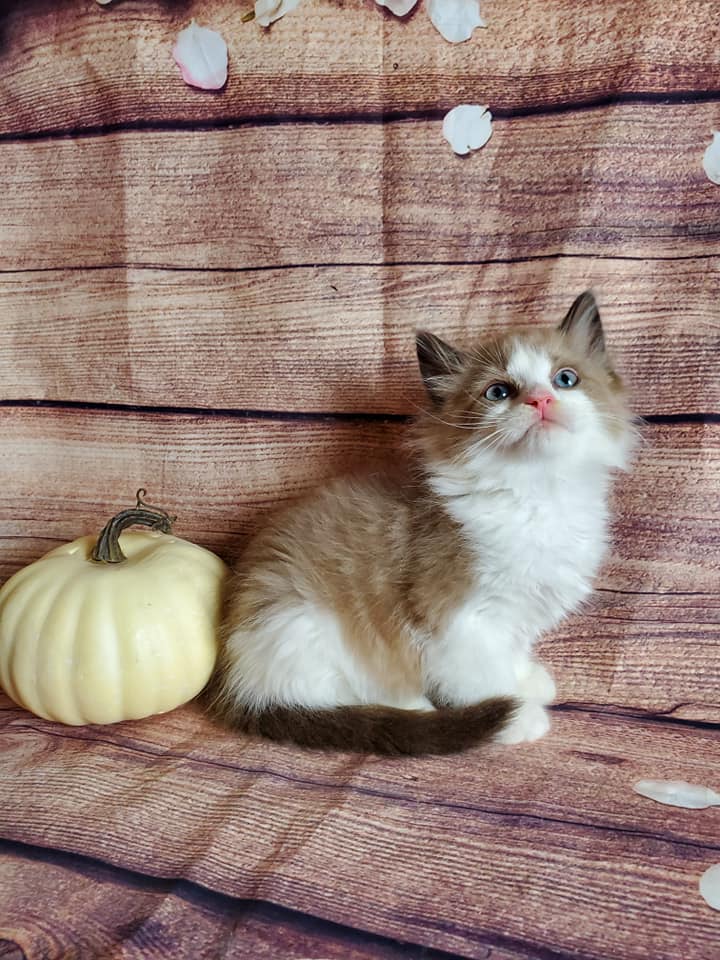
Understanding the Ragdoll’s Laid-Back Vocalizations
Ragdolls are known for their gentle personalities, relaxed posture, and unusually soft way of communicating. Their voices often match their temperament: quiet, conversational, and more likely to be a series of sweet murmurs than a demanding, full-volume meow.
Learning these sounds helps families recognize what a Ragdoll kitten or adult cat is expressing. A small chirp may signal interest, while a low purr can reflect comfort, anticipation, or an attempt to settle after excitement. Vocal tone becomes especially meaningful when paired with posture, eye contact, movement, and routine.
At Ragdoll Kittens Cattery in Helena, Montana, kittens grow up indoors in a cage-free family environment where they are handled daily. This early social contact gives them many calm opportunities to communicate with people and become comfortable with ordinary household interaction.
Why Ragdolls Sound Different
Ragdolls are often described as quiet cats, but “quiet” does not mean silent or distant. Many develop a varied vocal vocabulary that includes chirps, trills, soft meows, purrs, and brief questioning sounds. Their voices may be delicate, yet they frequently use them to maintain contact with the people they trust.
Breed tendencies are only part of the picture. Each kitten has an individual personality, and some Ragdolls are more talkative than others. Age, household routine, socialization, and the relationship between cat and caregiver all influence how often a cat vocalizes and which sounds become part of its daily communication.
Reading The Soft Ragdoll Vocabulary
A trill or chirrup commonly sounds bright and welcoming. Ragdolls may use it when greeting a person, watching a bird through the window, or inviting someone to follow them. A soft meow can mean many things, so its meaning becomes clearer when it appears at a familiar time, such as before a meal or during a play session.
Purring usually accompanies relaxation, affection, or contentment, especially when the cat has loose muscles, half-closed eyes, and a comfortable resting position. Cats can also purr when they are anxious or unwell, so the sound should be interpreted alongside behavior. A low growl, hiss, or sharp yowl deserves more space and attention because it can communicate fear, pain, overstimulation, or a strong boundary.
Matching Sounds With Body Language
Vocal signals are easiest to understand when they are considered together with physical cues. A Ragdoll that trills while approaching with an upright tail is probably greeting someone. The same cat may make a similar sound while staring intently at a closed door because it wants access to a particular room.
The following guide offers general interpretations rather than fixed translations. Individual cats create their own patterns, and caregivers gradually learn what certain sounds mean in specific situations.
| Sound or Vocal Pattern | Common Meaning | Helpful Response |
|---|---|---|
| Soft meow | Greeting, request, or mild attention-seeking | Respond calmly and check the immediate context |
| Trill or chirp | Friendly greeting, curiosity, or invitation | Acknowledge the cat and allow it to lead the interaction |
| Gentle purr | Comfort, affection, or relaxation | Continue quiet companionship if the body remains loose |
| Repeated louder meows | Hunger, frustration, loneliness, or an unmet need | Check food, water, litter, access, and social needs |
| Hiss, growl, or yowl | Fear, pain, conflict, or overstimulation | Give space and investigate carefully if the sound persists |
Everyday Moments That Invite A Reply
Ragdolls often vocalize during transitions. They may greet a family member returning home, comment when a favorite person moves from room to room, or offer a small trill before climbing onto a lap. These exchanges can become part of a predictable social routine, especially when people answer with a calm voice rather than loud or sudden reactions.
Kittens also make sounds during play and exploration. A soft chirp may accompany a pouncing game, while a series of tiny meows can appear when a kitten is looking for a sibling or caregiver. Observing a day in the life at a family-centered cattery shows how daily handling, naps, meals, play, and gentle interaction shape a young Ragdoll’s communication habits.
When A Vocal Change Needs Attention
A sudden change in vocal behavior deserves notice, especially when it occurs with hiding, appetite loss, reduced activity, litter box changes, weight loss, coughing, or difficulty breathing. A normally quiet cat that begins yowling repeatedly may be uncomfortable, confused, stressed, or experiencing a medical problem. Kittens with persistent distress sounds should also be assessed promptly.
Health screening is an important part of responsible Ragdoll care. Ragdoll Kittens Cattery emphasizes testing and screening related to HCM, FIV, FeLV, and feline heartworm disease. These measures do not explain every vocal change, but they support a broader preventive health approach. A veterinarian can evaluate unusual sounds and determine whether the cause is behavioral, environmental, or physical.
Creating A Calm Communication Routine
A Ragdoll usually responds best to predictable, respectful interaction. Speak softly, avoid punishing vocal behavior, and provide regular opportunities for play, rest, grooming, and companionship. When a cat learns that its quiet signals receive appropriate attention, communication can remain pleasant without encouraging frantic or demanding behavior.
Families preparing for a Ragdoll kitten can build trust by observing first and reacting second. Useful habits include:
- Learn the kitten’s normal sounds during meals, play, rest, and greetings.
- Pair vocal cues with tail position, ears, eyes, posture, and movement.
- Provide fresh water, clean litter, enrichment, and comfortable resting areas.
- Pause an interaction when the kitten becomes overstimulated or tries to retreat.
- Contact a veterinarian about persistent, painful, or abruptly unusual vocalization.
The most rewarding Ragdoll conversations are often quiet ones. A soft trill from the hallway, a purr during a cuddle, or a gentle meow beside the food dish can reveal a cat that feels secure enough to connect. Families seeking a well-socialized companion or potential therapy cat can explore available kittens and the adoption process through Ragdoll Kittens Cattery, where each kitten’s health, temperament, and early family experience are treated as essential parts of its future.