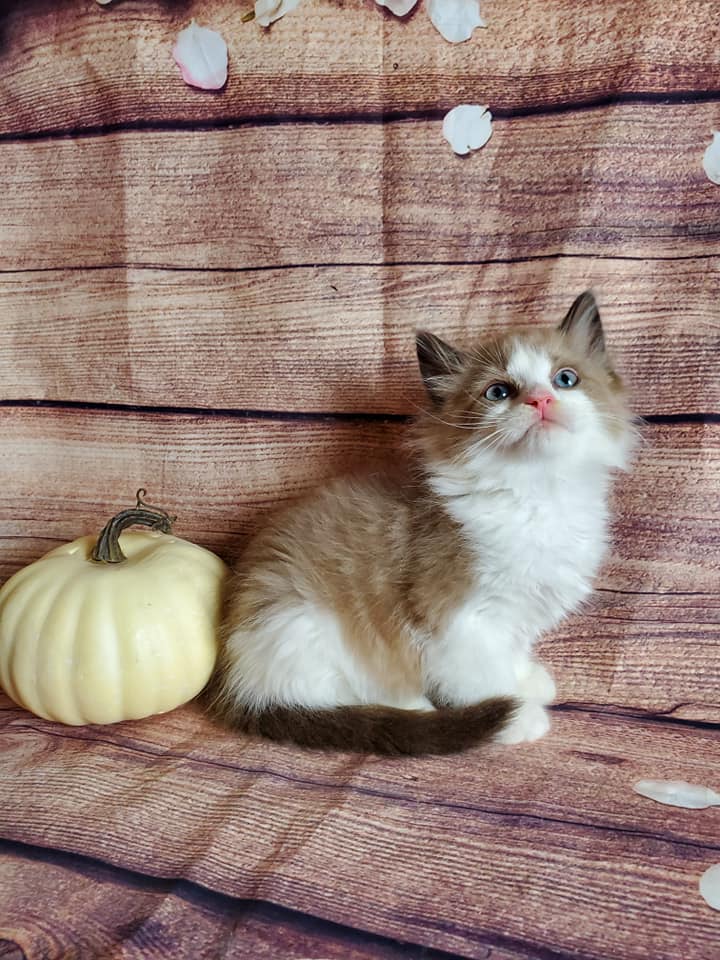
Why Ragdoll cats go limp when you pick them up
Few moments in a new kitten owner's day feel quite as rewarding as scooping up a young Ragdoll and feeling the body simply melt into your hands. The famously floppy response is one of the traits that first draws people to the breed, and it remains a defining feature long after kittens grow into full-sized adults weighing up to nine kilograms. At Ragdoll Kittens Cattery in Helena, Montana, kittens are handled daily from birth, which gives them the calm confidence to relax fully when picked up rather than squirming away.
For families researching the breed, understanding where this trait comes from, what it really means for daily life, and how to care for a cat with such a relaxed body posture helps set realistic expectations. There is more to the floppy response than a marketing slogan, and a few practical details are worth knowing before you welcome one of these blue-eyed companions into your home.
Where the floppy response comes from
The breed traces back to a single cat named Josephine in 1960s California, whose kittens were noted for an unusually placid nature and a tendency to relax completely when held. Ann Baker, who founded the breed, selectively bred descendants of Josephine for the docile, trusting temperament that Ragdolls are still recognised for today. Modern breeding programs, including small TICA-registered catteries like the one in Helena, continue to prioritise this same calm disposition alongside the pointed coat pattern and striking blue eyes.
The floppy response is partly behavioural rather than purely genetic. Kittens raised in busy households with frequent, gentle handling learn that being picked up is safe, so they relax into it. Cats raised with less human contact, or those with a more cautious temperament, may never show the classic full-body melt regardless of pedigree. This is why early socialisation matters so much in the first eight to twelve weeks of life.
What makes their bodies relax in your arms
The phrase "floppy" is a bit of a misnomer from a physiological standpoint. Ragdolls do not have abnormal muscle tone or a medical condition causing them to go limp. Instead, they have a particularly trusting nature paired with a strong willingness to be still when restrained. When a Ragdoll is scooped up and supported against a person's chest, many will simply stop tensing and let gravity do the rest, often draping an arm over the holder's shoulder in a way that feels almost theatrical.
This relaxed response is most pronounced in well-socialised cats from confident lines. Breeders who screen for hypertrophic cardiomyopathy, feline immunodeficiency virus, feline leukaemia virus, and feline heartworm disease tend to produce healthier, longer-lived cats that maintain this puppy-like ease well into their senior years. The same relaxed state shows up in other situations too. Many Ragdolls flop onto their sides on the floor when spoken to, or stretch belly-up for a chin scratch rather than rolling defensively.
Living with a cat that melts in your hands
In a busy household, the floppy trait is genuinely useful. Children can pick up a tolerant Ragdoll more safely than a tense, twisting cat, and the breed's patience makes them popular choices for therapy work in nursing homes, schools, and reading programs. Therapy cat handlers in Australian cities such as Melbourne, Sydney, and Brisbane specifically seek out Ragdolls for this reason, pairing them with elderly residents or children with additional needs.
There are small practical adjustments that come with a cat that likes to be carried. Doorways, stairs, and slippery floors deserve attention, since a relaxed cat is less likely to twist and land safely if dropped. Teaching children to sit on the floor and hold the cat, rather than walking around with them, reduces the risk of a tumble. Ragdolls also tend to follow their people from room to room and may wait by the door when you come home, ready to be scooped up the moment you sit down.
Caring for a limp-bodied cat safely
Because Ragdolls are heavy, semi-longhaired cats with solid frames, supporting their back end when picking them up is essential. One hand under the chest and another under the hindquarters keeps the spine aligned and prevents the sudden twist that can happen if a startled cat decides to jump down mid-carry. Their plush double coat benefits from a weekly brush, which doubles as a bonding moment that reinforces their relaxed state.
Health-wise, the floppy tendency itself is not a concern, but the breed does carry a known predisposition to hypertrophic cardiomyopathy. Responsible breeders test breeding cats and share results, so buyers should always ask for documentation. Australian pet owners often pair this with a comprehensive pet insurance policy from local providers such as Petplan or PetSure, which helps cover diagnostic imaging and cardiology referrals if needed later in life.
Ragdolls in Australian homes
Australian living conditions suit the breed extremely well. Most councils in cities like Sydney, Melbourne, Perth, and Adelaide require cats to be contained to the owner's property, and many apartment buildings have stricter rules about keeping pets indoors. The Ragdoll's preference for indoor life, combined with their calm energy around small spaces, makes them a natural fit. Their thick coats handle cool Tasmanian winters and air-conditioned Brisbane summers comfortably, though shaded spots and fresh water still matter during heatwaves.
For families who travel between states or relocate, each Australian jurisdiction has its own biosecurity rules. Tasmania requires imported cats to meet specific entry conditions, and most councils require microchipping and registration before a kitten can legally come home. A reputable breeder will provide vaccination records, microchip details, and pedigree paperwork so the transition into an Australian household goes smoothly, whether that home is a townhouse in Hobart or a terrace in inner Melbourne.
A practical takeaway: when you bring a Ragdoll home, spend the first few days letting the kitten come to you on the floor. Once trust is built, try a gentle scoop with both hands, and you will likely feel the famous melt for yourself, a small moment that captures exactly why the breed has earned its name.