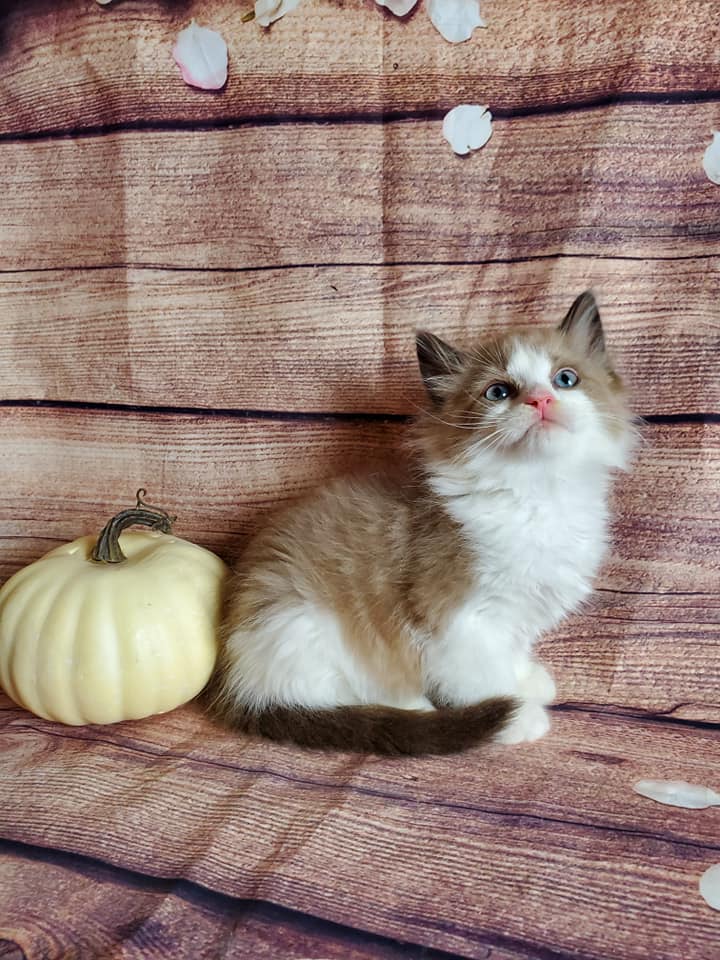
Understanding the quiet nature of Ragdoll cats
Ragdoll cats have earned a reputation as gentle, laid-back companions whose soft chirps and trills stand in stark contrast to the constant chatter of more talkative breeds. Many Australian families in cities like Melbourne and Brisbane choose Ragdolls precisely because their calm temperament suits apartment living and close-neighbour townhouses. Yet some owners eventually wonder whether their cat's silence means something is wrong, or whether there are gentle ways to invite a little more conversation.
Vocalisation in cats is partly genetic, partly learned, and partly a response to environment. While Ragdolls will absolutely speak up when dinner is late, they tend to reserve their voices for meaningful moments rather than narrating every room they walk through. Understanding the roots of this calm behaviour helps owners decide whether to accept it as part of the breed's charm or to gently encourage more chatter.
| Breed | Typical vocal level | Common sounds | Best suited to |
|---|---|---|---|
| Ragdoll | Low | Soft chirps, trills | Apartments, quiet homes |
| Siamese | Very high | Loud meows, yowls | Active households |
| Persian | Very low | Silent, occasional meow | Calm environments |
| Maine Coon | Moderate | Chirps, trills, meows | Families, large homes |
| Burmese | High | Conversational meows | Engaged owners |
The breed's natural disposition
Ragdolls were developed in California during the 1960s by breeder Ann Baker, who selected cats with exceptionally docile temperaments. Over generations, that selective breeding produced felines that prefer following their humans from room to room rather than demanding attention with loud meows. Compared to a Siamese or an Oriental Shorthair, a Ragdoll's vocal range is narrow, often limited to a melodic chirp or a soft trill used as a greeting.
This quietness is not shyness or distress. Most Ragdolls happily engage in eye contact, head bumps, and slow blinks to communicate affection. Pet owners in inner-Sydney apartments frequently comment that their Ragdolls communicate through body language more than sound, which suits neighbours in shared buildings and noise-sensitive rental properties.
Australian veterinarians, including those working with RSPCA clinics, often note that quieter cats make easier long-term companions for retirees in places like Adelaide's leafy suburbs or retirement villages across Perth. The breed's relaxed vocal habits are a hallmark, not a flaw.
Why some Ragdolls talk more than others
Even within a single litter, personality varies. A kitten that grows up in a household with a chatty adult cat, perhaps a Burmese or a Tonkinese, often picks up more vocal habits than one raised in a quieter home. Early socialisation between weeks three and twelve shapes how a kitten experiments with sound, and breeders who speak softly to kittens during handling tend to raise more conversational adults.
Australian pet insurance data from providers like PetSure show that breeds with high vocalisation scores, such as Siamese, are reported more often for noise-related behavioural consultations. Ragdolls rarely trigger these calls. Individual variation also comes from sex, with some females being more chatty during heat cycles before desexing, which is mandatory across most Australian states, and some males becoming more vocal when they detect a neighbouring cat outdoors.
Genetics matter, but so does the simple fact that some cats are introverts. A Ragdoll may be perfectly healthy, well socialised, and still prefer silence to small talk.
Home environment and daily routine
Ragdolls thrive on routine, and they often vocalise at predictable moments: breakfast time, the rustle of a treat bag, or the arrival of a favourite person at the door. Households with consistent schedules, common in busy Melbourne or Brisbane families, tend to produce cats that meow on cue. Chaotic environments may make a Ragdoll retreat into silence because loud background noise feels overwhelming.
Indoor-only living, which is strongly encouraged across Australia to protect native wildlife such as possums, lizards, and small marsupials, also shapes how a cat uses its voice. Outdoor cats have more to comment on, birds at the window, passing dogs, weather changes, while indoor cats need their humans to provide stimulation. Adding bird feeders outside a window, puzzle feeders indoors, or short training sessions can give a Ragdoll something worth commenting on.
Climate plays a subtle role too. During the hotter months in Darwin or western Queensland, Ragdolls often become quieter simply because heat suppresses activity. Cooling mats, shaded rest areas, and air-conditioned retreats help maintain a comfortable vocal rhythm.
Encouraging your Ragdoll to speak up
The best approach to vocalisation is gentle encouragement rather than demand. Talking back to your cat in a soft, high-pitched voice, the way you would speak to a kitten, often elicits a chirp in return. Responding consistently when your cat does speak reinforces the behaviour, even if the answer is a calm acknowledgement rather than food.
Interactive play sessions with wand toys, especially just before feeding, mimic the hunt-catch-eat pattern and often leave a Ragdoll breathless and chatty. Clicker training, widely taught by Australian pet behaviourists and through programs run by the Delta Institute, helps cats learn that specific sounds earn rewards. Keep sessions short, no more than five minutes, and end on a successful note.
Avoid punishment for meowing, which teaches cats to stop communicating altogether. Instead, reward quiet behaviour with calm attention and reward vocal behaviour with brief, warm responses. Over time, many Ragdolls develop a richer vocabulary of trills and soft meows, especially when their owners treat conversation as a two-way exchange.
When quietness warrants a closer look
A sudden change in vocal habits, particularly a previously talky cat going silent, can point to dental pain, throat irritation, or stress. Australian vets, particularly those in regional towns like Toowoomba or Ballarat, often see Ragdolls with mild upper respiratory infections that temporarily muffle the voice. Older cats may also quieten with age or with the onset of arthritis that makes jumping to favourite perches uncomfortable.
Annual health checks, including screening for HCM (hypertrophic cardiomyopathy), kidney function, and dental health, help catch issues before they affect vocalisation. Reputable breeders, such as TICA-registered catteries, screen parents for the conditions most likely to affect quality of life. A healthy Ragdoll may still be quiet, but the quietness will be relaxed rather than withdrawn.
Patience and observation matter more than any training technique. A consistent routine, plenty of gentle conversation, and thoughtful home enrichment give even the soft-spoken Ragdoll every reason to find their voice.