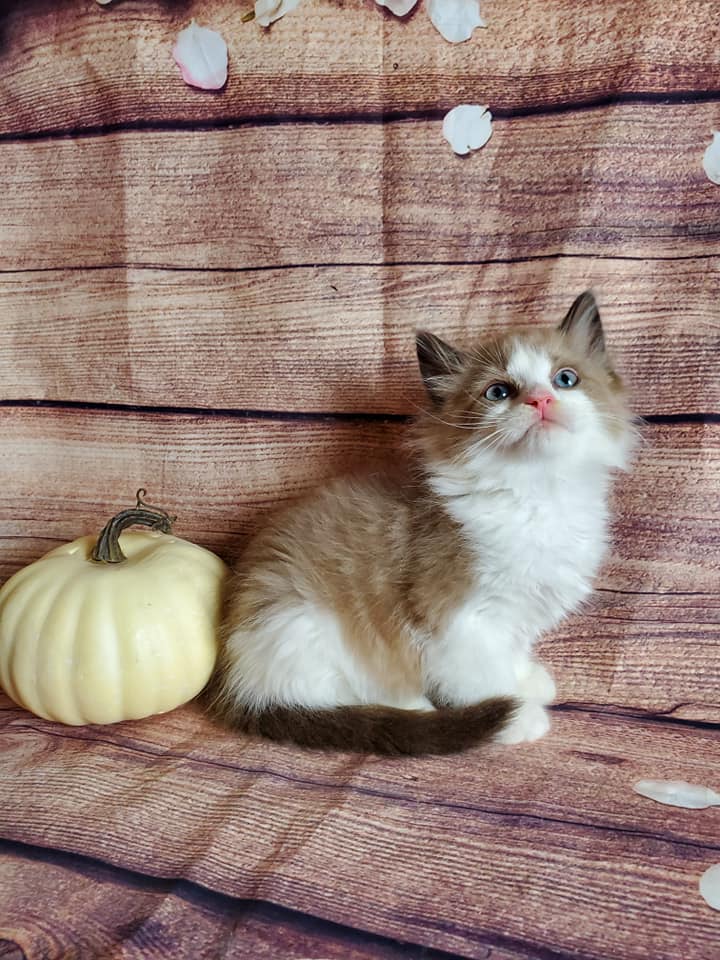
The Relaxed Nature Behind a Ragdoll’s Famous Flop
Ragdolls are known for becoming unusually relaxed when they are picked up, sometimes allowing their legs to hang loosely against a person’s body. This behavior has helped create the breed’s famous reputation for going limp when held. The effect is usually a combination of gentle temperament, trust, and relaxed muscles rather than a sign that anything is wrong.
The floppy trait can look surprising if you are used to cats that immediately brace their paws or twist away from handling. A comfortable Ragdoll may soften through the shoulders, release tension in the hind legs, and settle into the holder’s arms. Some kittens show this response early, while others become more relaxed as they grow familiar with human contact.
It is important to remember that every cat has an individual personality. A Ragdoll may be affectionate without enjoying prolonged carrying, and a kitten that stays alert in your arms is not less purebred or loving. The breed’s relaxed reputation describes a common tendency, not a requirement.
The Breed Story Behind The Flop
The name Ragdoll is often connected to stories of cats becoming soft and pliable when lifted. Early breeders noticed that some cats relaxed dramatically in a person’s arms, allowing their bodies to rest instead of resisting. Over generations, breeders selected for calm, people-oriented temperaments, helping preserve this distinctive characteristic.
A Ragdoll’s body is not actually boneless, and the cat does not lose muscular control. Its joints, bones, and muscles work normally. The “flop” generally reflects voluntary relaxation, much like a person loosening their shoulders when settling into a comfortable chair.
Genetics influence temperament, but early experiences matter as well. Kittens that receive kind, regular handling can become more confident about being held, examined, and carried. Their response reflects both inherited personality and the quality of their social environment.
What Relaxation Looks Like
A relaxed Ragdoll may allow its front legs to rest against your arm while its back legs extend or curl naturally. The head may lean toward your chest, the paws may remain loose, and the cat may purr, blink slowly, or calmly observe the room. These are generally signs of comfort when the body remains coordinated and breathing appears normal.
Some cats become especially floppy when they are sleepy. Others relax only with a familiar person or in a quiet setting. A kitten may be playful one moment and deeply settled the next, so the trait can vary according to age, mood, activity level, and surroundings.
The response should still be voluntary. A cat that struggles, stiffens, vocalizes, pins its ears back, or repeatedly pushes away is communicating discomfort. Ragdoll temperament does not mean the cat should be forced to remain in someone’s arms.
Trust, Socialization, And Daily Handling
Human socialization can make the floppy behavior more noticeable. Kittens raised in a family environment often encounter household sounds, gentle touch, different people, and short periods of being lifted. These experiences teach them that handling can be safe and predictable.
At a small, cage-free, family setting such as Ragdoll Kittens Cattery, daily interaction is part of helping kittens develop confidence around people. Calm handling should be paired with support, breaks, and attention to each kitten’s signals. The goal is a secure, adaptable companion rather than a cat that passively tolerates anything.
A well-socialized kitten may accept being held for grooming, nail care, or a veterinary examination more readily. Still, trust is built through cooperation. Allowing a kitten to return to the floor when it has had enough protects that trust and makes future handling easier.
| Behavior when held | Likely meaning | Appropriate response |
|---|---|---|
| Loose legs, soft body, slow blinking | Comfort and relaxation | Continue supporting the body calmly |
| Purring with relaxed posture | Contentment, though context matters | Keep the session gentle and brief |
| Stiffening or pushing away | Uncertainty or a wish to leave | Lower the kitten safely |
| Crying, hissing, or flattened ears | Fear, stress, or discomfort | Stop handling and give space |
| Sudden weakness or unusual limpness | Possible medical concern | Seek veterinary advice promptly |
Normal Floppiness Versus Health Concerns
Healthy relaxation usually appears when the cat is awake, responsive, and otherwise acting normally. A comfortable Ragdoll should be able to stand, walk, jump, play, and adjust its position. When placed on a secure surface, it should regain normal posture and move with coordination.
True weakness looks different from a relaxed posture. Warning signs can include difficulty standing, stumbling, dragging a limb, collapse, extreme sleepiness, reduced appetite, pale gums, labored breathing, or a cat that seems unaware of its surroundings. A kitten that suddenly becomes limp should be treated as a medical concern rather than assumed to be displaying a breed trait.
Responsible breeders screen for important feline health conditions and provide veterinary records for their kittens. Health discussions may include screening related to hypertrophic cardiomyopathy, FIV, FeLV, and feline heartworm disease. Buyers should receive clear information about the kitten’s history, current care, and recommended veterinary follow-up.
Safe Ways To Hold A Relaxed Ragdoll
Even a trusting kitten needs full physical support. Ragdolls can become so relaxed that their hindquarters shift unexpectedly if they are held under the front legs alone. Proper technique keeps the experience comfortable and prevents accidental strain.
- Place one hand beneath the chest and front legs.
- Support the pelvis and hindquarters with the other hand.
- Hold the kitten close to your body rather than letting it dangle.
- Keep the head and spine in a natural, comfortable position.
- Set the cat down slowly as soon as it begins to squirm or signal stress.
Children should learn to sit while holding a kitten and use both hands. Supervision is essential, since a relaxed cat can still scratch or jump if startled. Short, positive handling sessions are safer and more useful than carrying a kitten for long periods.
Temperament, Color, And Individual Personality
The floppy response is associated with Ragdoll temperament, not with one specific color or pattern. Seal, blue, chocolate, lilac, colorpoint, mitted, and bicolor Ragdolls can all be affectionate and relaxed. Markings may influence appearance, but they do not guarantee how a particular kitten will behave in someone’s arms.
When choosing a kitten, look for bright eyes, clean ears, a healthy coat, steady movement, and an alert response to normal activity. A kitten that approaches gently, plays appropriately, and recovers after a new sound may be showing useful confidence. It does not need to become completely limp to demonstrate a loving nature.
The best match comes from evaluating temperament alongside health, socialization, and the home’s expectations. Some Ragdolls prefer lap time, while others show affection by following family members, sleeping nearby, or greeting people at the door. Their bond with humans can be strong even when their handling preferences differ.
A Ragdoll that relaxes in your arms is expressing comfort, not surrender. Support the kitten carefully, respect its signals, and watch for any change from normal movement or behavior. For families seeking a well-socialized companion or therapy prospect, learning how this breed communicates is an important part of responsible adoption. Explore available information from a reputable Ragdoll cattery and prepare a calm, supportive home for your future kitten.